Read the tested wash cycle beside the water-use number
A litres-per-wash figure belongs with its tested cycle and capacity. Use a worked hypothetical comparison to avoid transferring one result to every programme.
Updated:
Read beyond the large water-consumption number
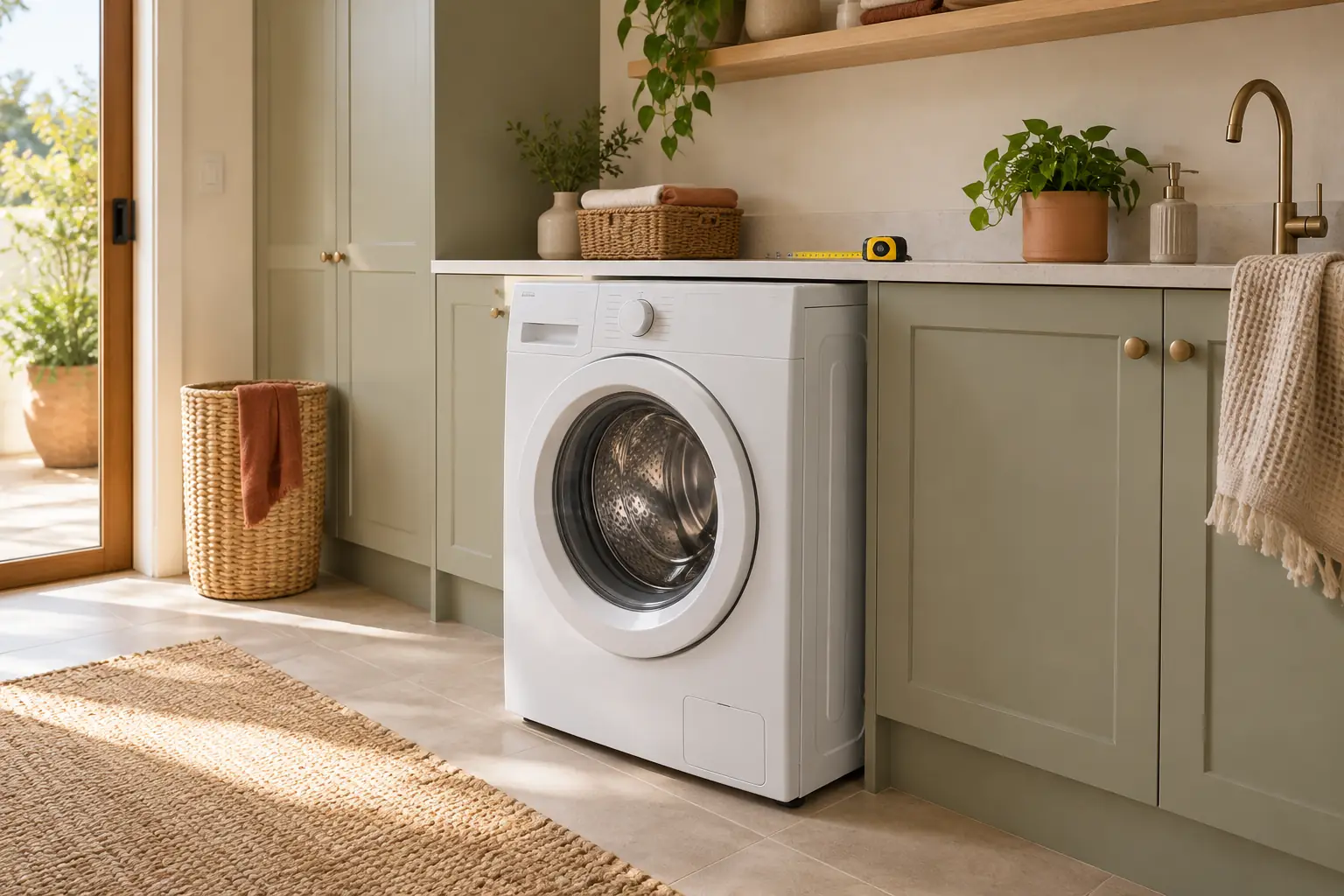
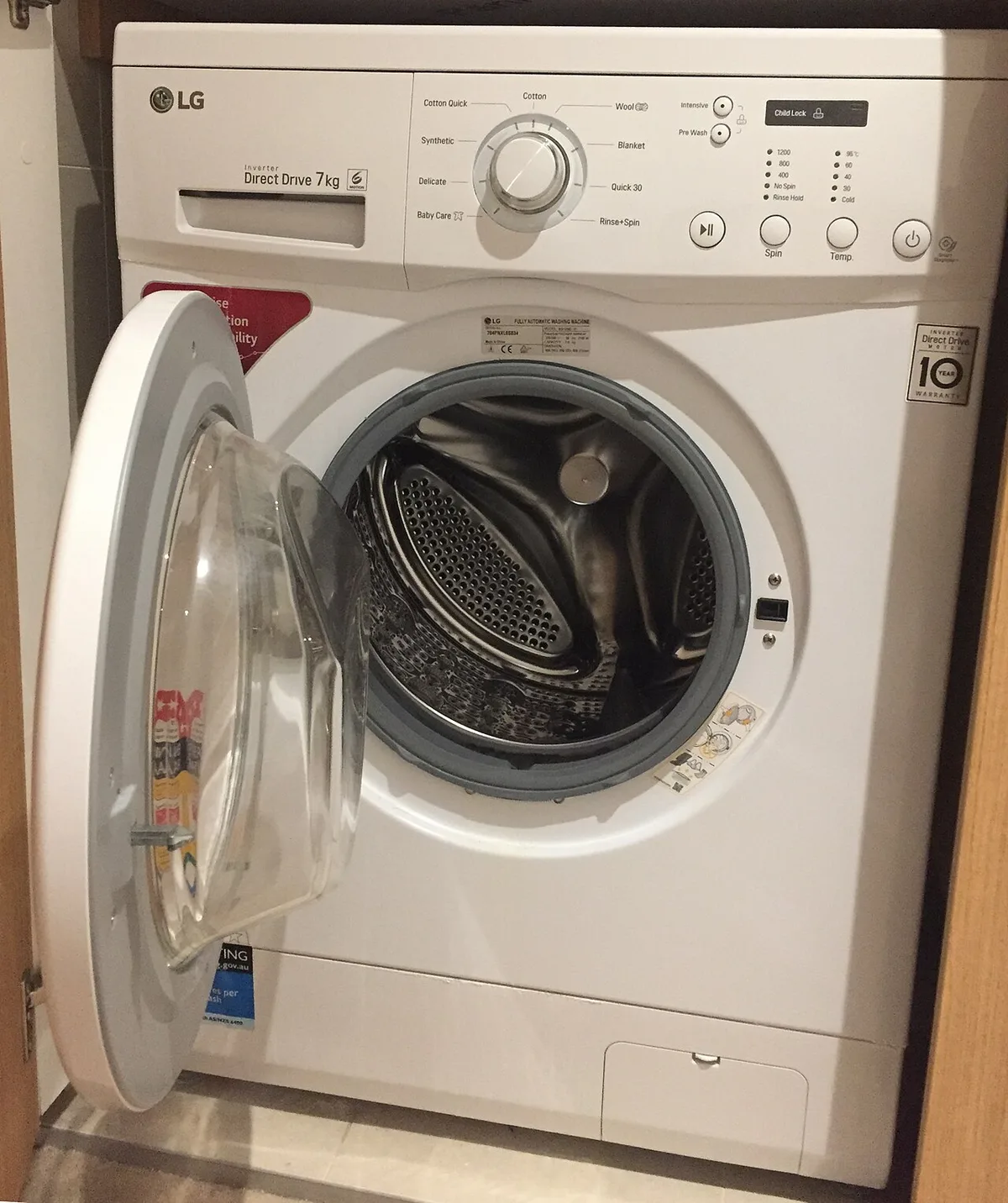
The Australian WELS guide explains that washing-machine labels include litres per wash and load capacity, with model and tested-cycle details also provided. Keep those details together. A litres-per-wash value stripped from its cycle can look like a promise about every wash the machine performs. The real front-loader photograph shows several programme positions, making the practical problem visible: choosing a different setting is not the same as reproducing the labelled test condition. The photograph itself supplies no verified WELS result.
Water label fields ? WGA244U0AU programme-specific load limits ?
Use a fictional comparison to expose the assumptions
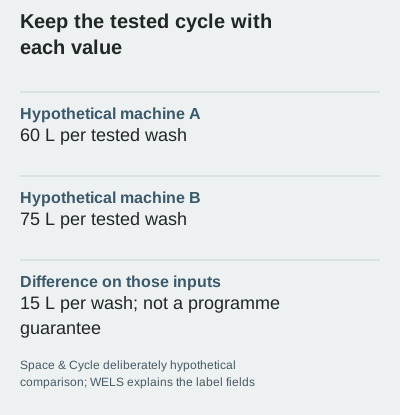
Consider two imaginary machines with labelled test-cycle inputs of 60L and 75L per wash. The arithmetic difference is 15L, but it becomes a useful comparison only when the relevant capacities and test conditions are understood. These numbers do not describe the Bosch documentation example or any photograph on this page. They let us examine the calculation without pretending to have measured a product. Do not promote the lower number into a universal best-buy claim while ignoring whether the tested cycle suits the intended laundry.
Translate cycles into volume, then keep the condition visible
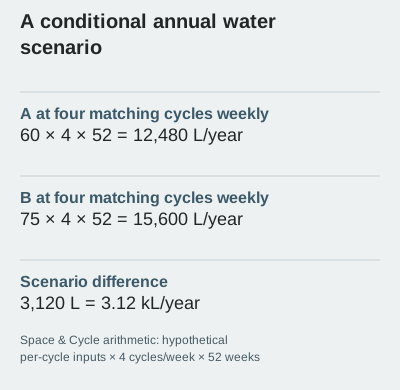
If each fictional machine ran four matching cycles per week for 52 weeks, the first scenario would use 12, 480L and the second 15, 600L. The difference is 3, 120L, or 3.12 kL. That is conditional arithmetic, not a household forecast. A different number of cycles changes the result, and using a different programme may invalidate the per-cycle input. Write the assumption directly beside the total rather than hiding it in a footnote that disappears when the number is copied into a shortlist.
Capacity and programme choice remain separate checks
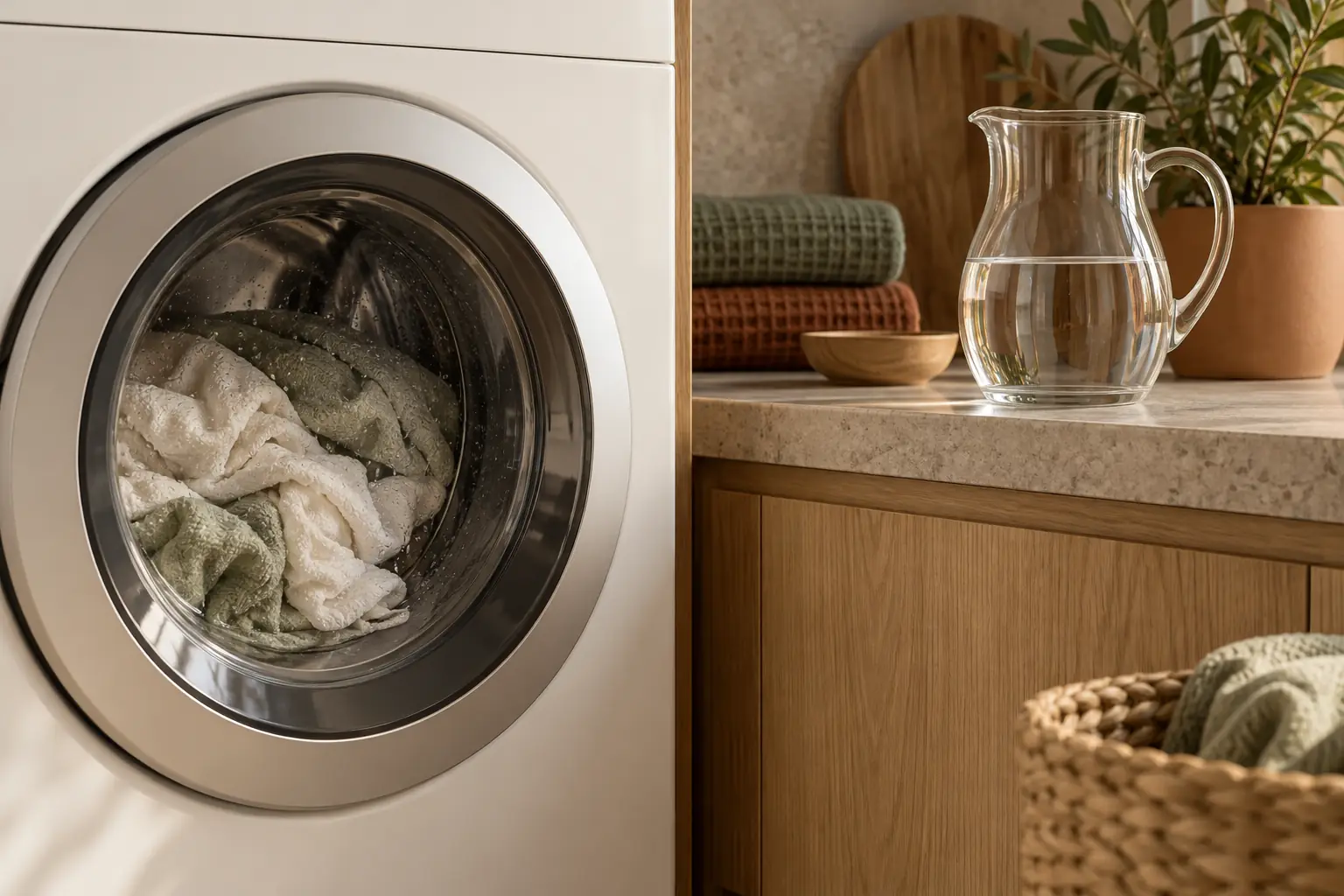
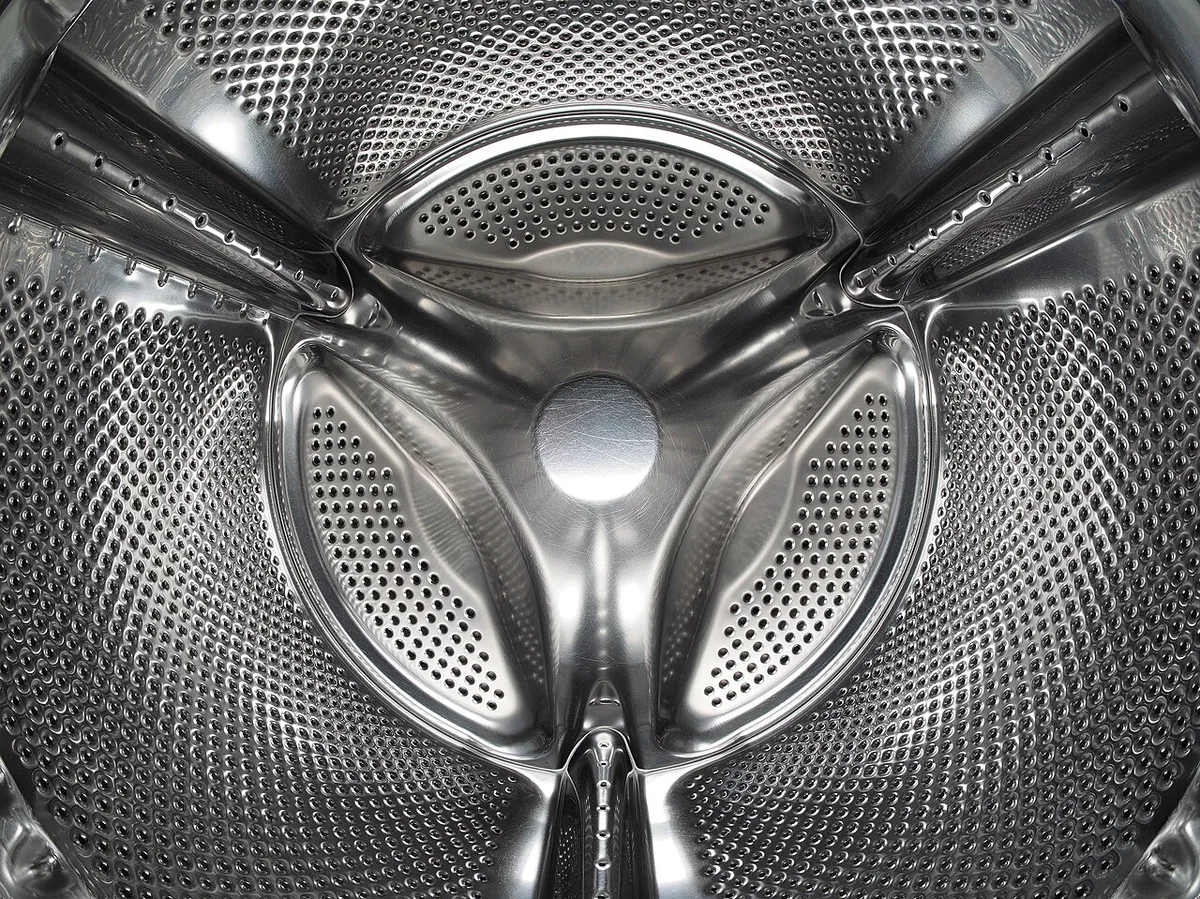
The Bosch WGA244U0AU manual demonstrates that programmes can have different permitted loads, including 9 kg for standard Cottons and 4 kg for Easy Care. Those load limits do not supply water consumption for those programmes. The drum photograph similarly shows physical construction without measuring litres. Do not infer water use from maximum capacity, drum appearance or a partial load alone. Obtain the relevant documented water figure when available, and describe an unverified programme's consumption as unknown rather than borrowing the label value.
Use the register to resolve identity, not appearance
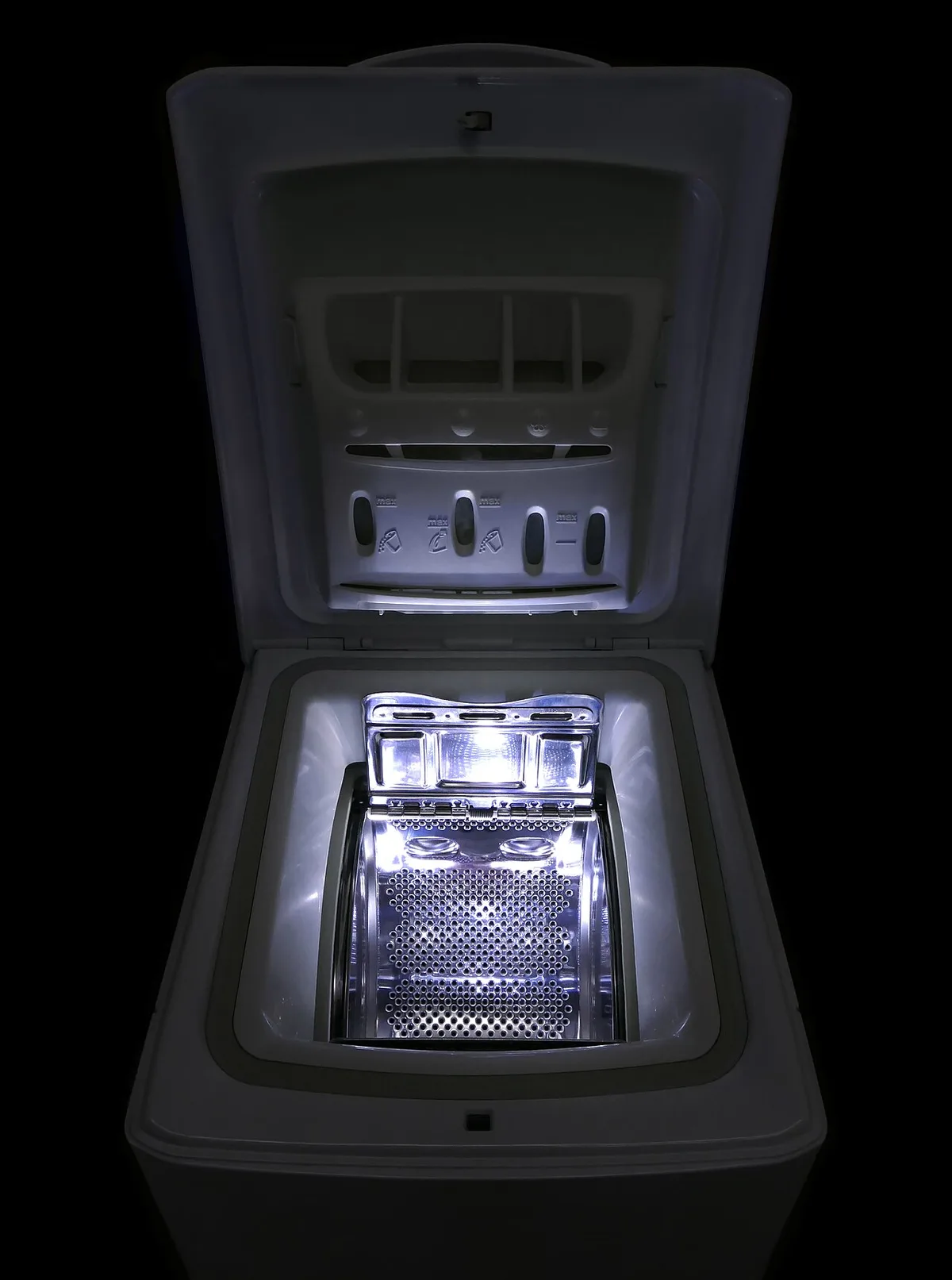
The WELS page directs buyers to verify a model or registration number in the product database. A photograph of a similar-looking appliance cannot perform that identity check. The top-loading example on this page is a different machine photographed in Sweden; it illustrates another loading arrangement, not an Australian registration or efficiency claim. Match the exact model in the information being offered to the registered information before using its figure in a comparison. If the names differ, resolve the mismatch rather than treating a shared brand as sufficient.
Carry a usable input into the water tool
For an annual scenario, enter a documented litres-per-cycle value, the number of relevant cycles, the chosen number of weeks and an applicable volumetric water rate if a cost is needed. The water tool leaves these inputs under your control. Its result does not include unrelated fixed charges or prove that all programmes consume the entered amount. Save the cycle and model beside the calculation so a later reader can see exactly what was assumed and which change would require the calculation to be rebuilt.
Open official model documentation ? Open official model documentation ?