Keep an appliance warranty separate from consumer guarantees
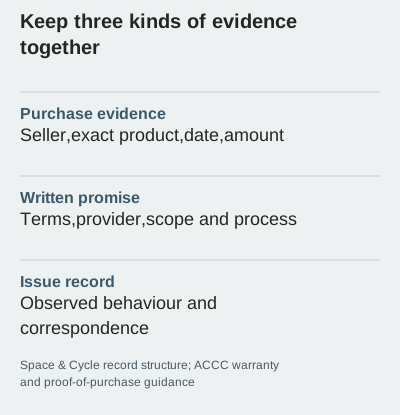
Keep the written warranty, purchase evidence and a factual issue timeline together while distinguishing additional promises from automatic consumer guarantees.
Updated:
A warranty and a consumer guarantee are different
The ACCC explains that a business warranty is an additional promise and cannot replace automatic consumer guarantees. Keep that distinction visible when organising appliance paperwork. A printed warranty period is not, by itself, a complete answer to every future consumer-rights question. This article helps assemble a factual record; it does not decide a particular remedy or how long rights apply to an individual purchase. Use the regulator's guidance for the general distinction and the actual transaction details for a specific discussion.
Warranty and consumer guarantees distinction ? Proof of purchase records ?
Save the promise that accompanied the actual unit
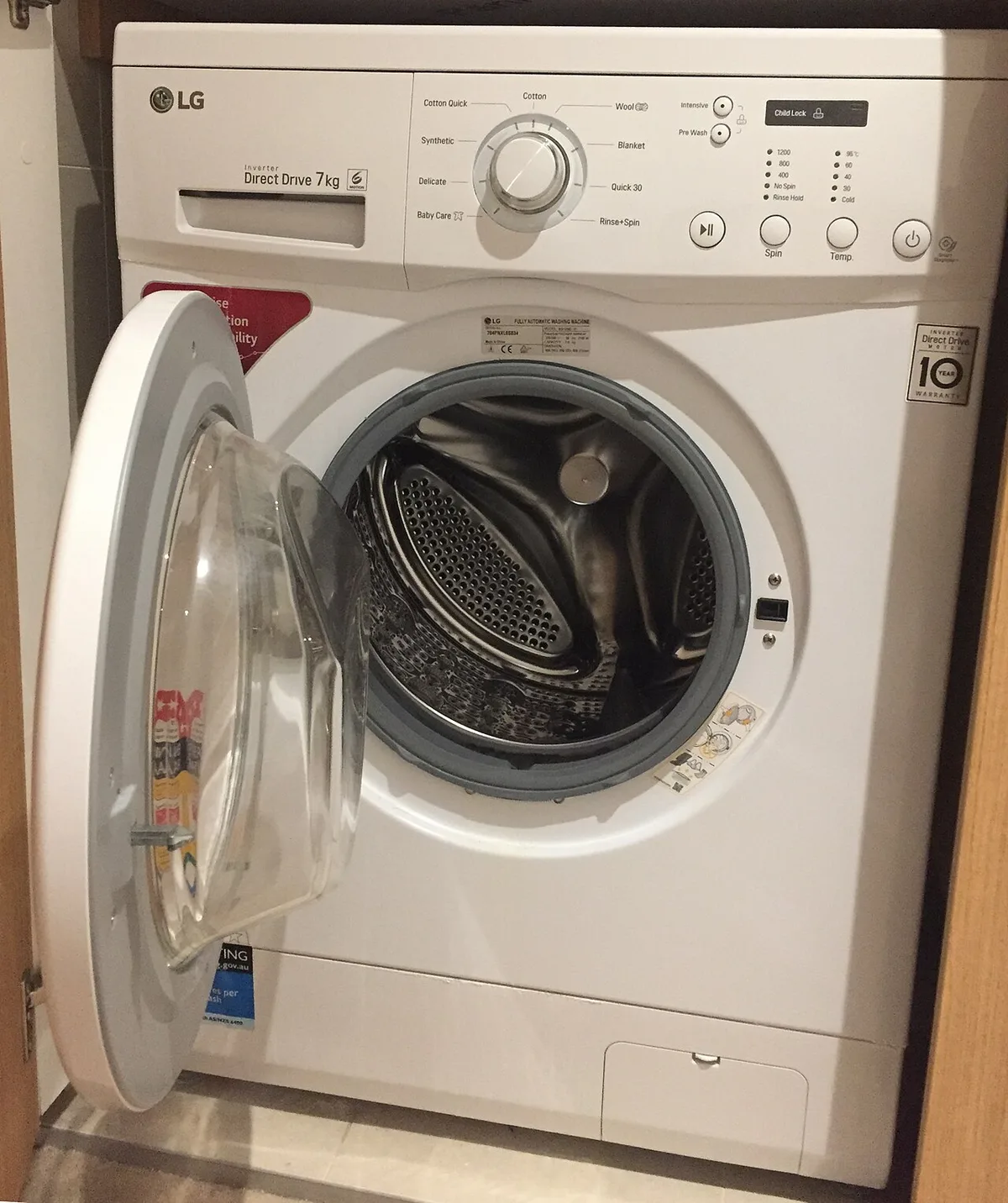
Keep the supplied warranty terms with the exact product identity and seller details. The real washing-machine photograph includes visible branding and promotional markings, but it shows a different model from our Bosch example. An image of a sticker is not the complete applicable warranty. Avoid assuming that a promise associated with a similar product or a single component covers the whole appliance on the same terms. Preserve the actual wording rather than replacing it with an informal summary such as everything covered.
Keep purchase evidence readable and connected
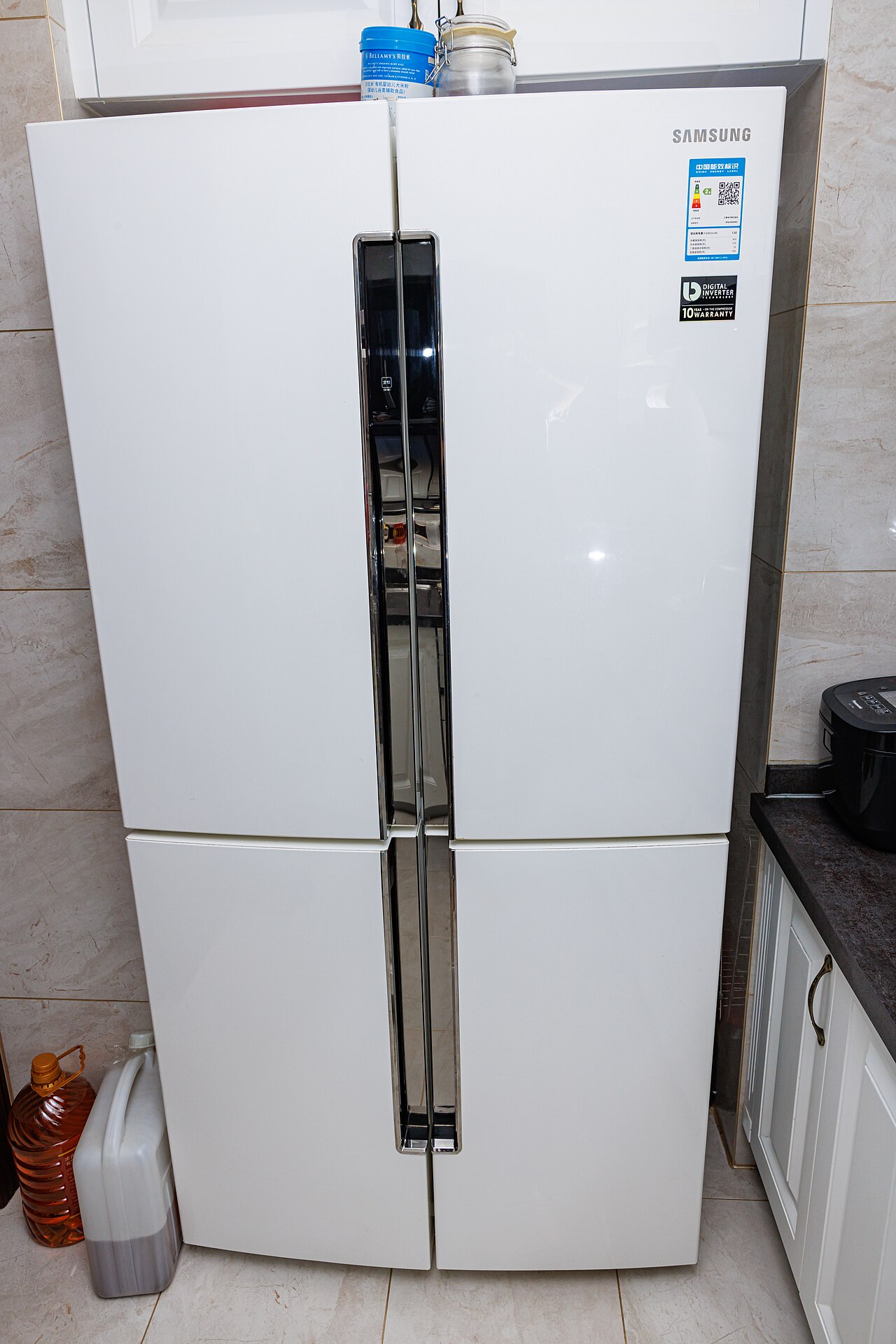
The ACCC proof-of-purchase guidance explains that a business can ask for evidence when a consumer seeks a remedy. A useful record connects the seller, product, supply date and amount. Store the relevant receipt or other appropriate evidence in a way that remains readable, and keep any delivery record with it. The refrigerator photograph on this page cannot establish a transaction or identify the appliance you own. Use the actual model information and purchase records rather than relying on an unrelated product image.
Write an observation timeline without inventing a diagnosis
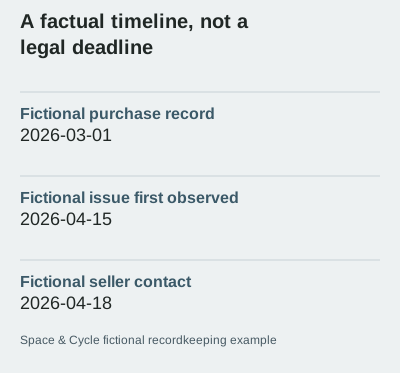
Imagine a fictional purchase on 2026-03-01, an issue first observed on 2026-04-15 and contact with the seller on 2026-04-18. Those dates organise events; they do not establish a legal deadline or entitlement. Record what happened, when it happened and any response received. Describe visible behaviour in ordinary terms instead of claiming an internal fault you have not diagnosed. Do not dismantle an appliance to create evidence or continue unsafe operation for the sake of a photograph; follow the applicable instructions for the situation.
Separate symbols from an unsupported explanation
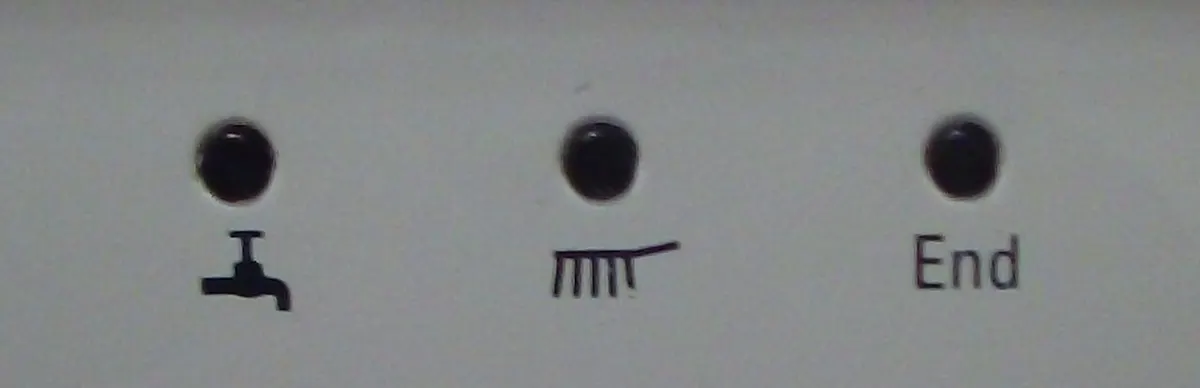
The Siemens indicator photograph shows appliance symbols, but it does not diagnose another machine. If an indicator appears on your own appliance, preserve its exact appearance and consult the correct documentation. Keep communications and any reference numbers with the factual timeline. This makes a later conversation easier without turning a guessed interpretation into a claim of proven cause. A record can be useful even when the cause is still unknown and a qualified assessment is needed.
Use the record for the next appropriate conversation
Bring the exact product details, purchase evidence, supplied terms and factual chronology to the relevant business when raising an issue. The ACCC states that it does not resolve individual warranty disputes, so its information page should not be presented as a personal claim service. If a question remains unresolved, use the applicable consumer-assistance channels rather than relying on a date calculation in this guide. The record's value is clarity: it keeps additional promises, transaction evidence and observed events available without pretending to determine the outcome.
Open official model documentation ? Open official model documentation ?