Compare fridge and freezer space separately
A 494L fridge-freezer example contains 348L of refrigeration and 146L of freezer space. Learn what that split answers and what litres cannot tell you.
Updated:
Compare the compartments before the headline total
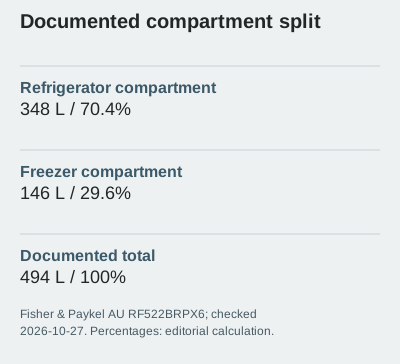
Start by separating refrigerator volume from freezer volume. Fisher & Paykel's Australian RF522BRPX6 documentation lists 494L overall, comprising 348L in the refrigerator and 146L in the freezer. That split is more useful than the total alone when deciding whether a layout matches your shopping and storage habits. The official page was checked on 2026-10-27 and marks this model end of line, so it is a documentation example, not a claim of current local availability or a recommendation to buy remaining stock.
RF522BRPX6 documented specifications ?
Calculate the split without creating a capacity rule
Adding 348L and 146L gives the documented 494L total. Dividing each compartment by that total produces approximately 70.4% refrigerator and 29.6% freezer. These percentages describe this example; they are not an ideal ratio for every Australian household. A household keeping large frozen batches may ask a different question from one prioritising fresh ingredients. Write down which compartment currently limits your storage and what kinds of containers cause the difficulty. That turns a broad request for a bigger fridge into a more specific comparison.
Equal totals can conceal different trade-offs
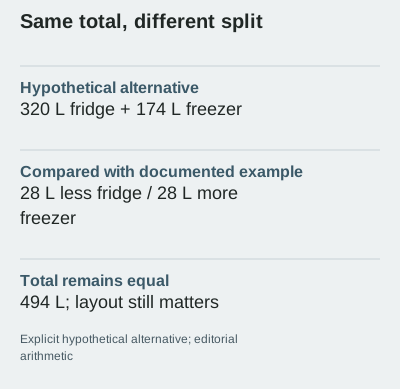
Consider a deliberately hypothetical alternative with 320L of refrigerator space and 174L of freezer space. It also totals 494L, but exchanges 28L of refrigeration for 28L of freezing compared with the documented example. The second figure makes that trade-off explicit. It does not represent another real product or establish that either arrangement holds your containers. When comparing actual models, use their own compartment figures and matching capacity definitions. Keep a missing figure unresolved rather than assuming that the total is divided in the same proportions as another appliance.
A bottle's shape still matters
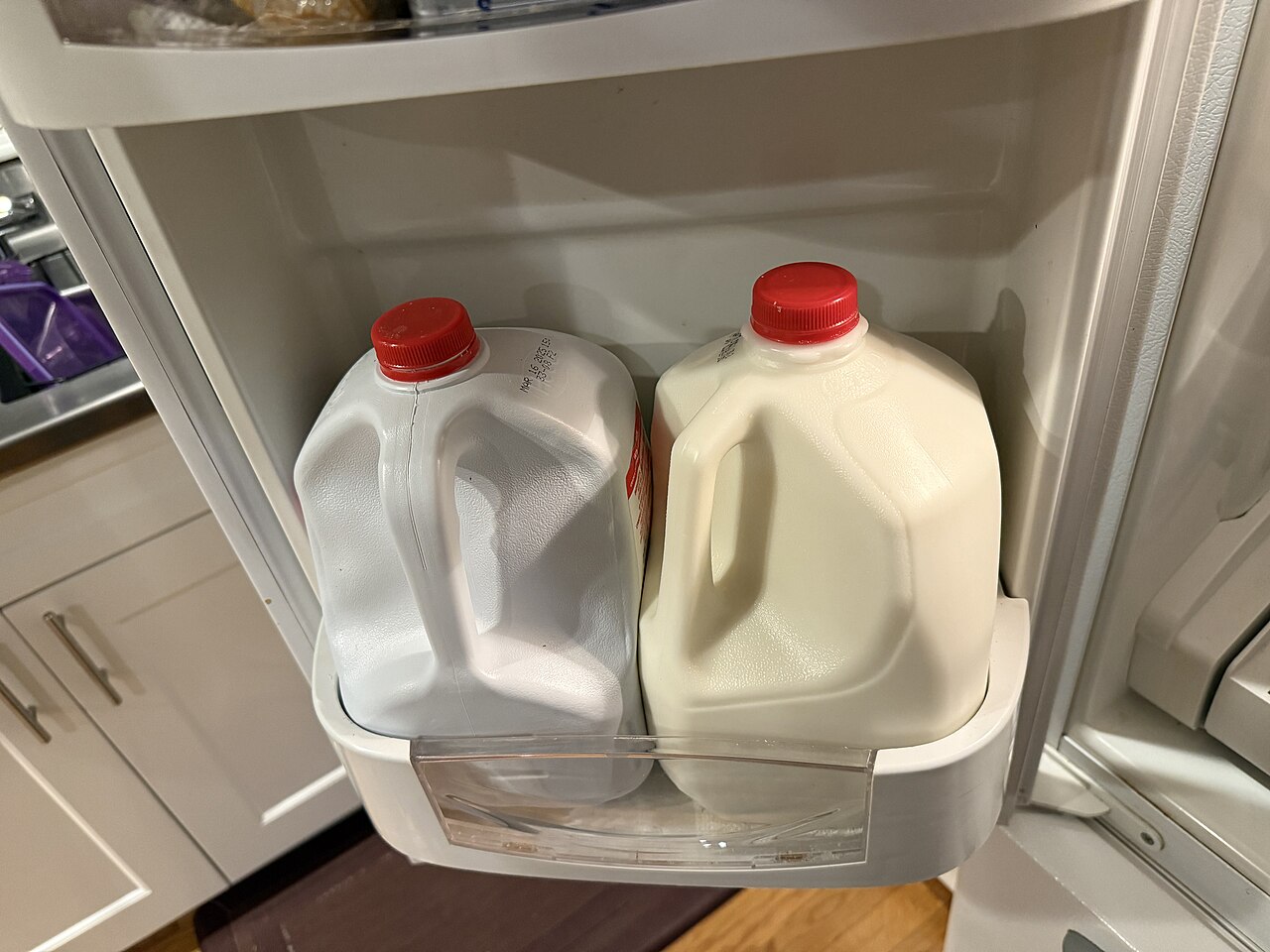
Litres do not describe every shelf opening or door-bin dimension. The real door-bin photograph shows two US gallon-shaped containers fitting closely together; it illustrates a shape constraint, not an Australian bottle-size recommendation. Your own tall bottles, trays and reusable boxes may need a different arrangement. List the awkward items and compare their dimensions with the actual usable layout during a permitted inspection. Do not infer a guaranteed fit from a product's total capacity or assume that removable shelves can be rearranged in every configuration.
Read the layout separately from the label
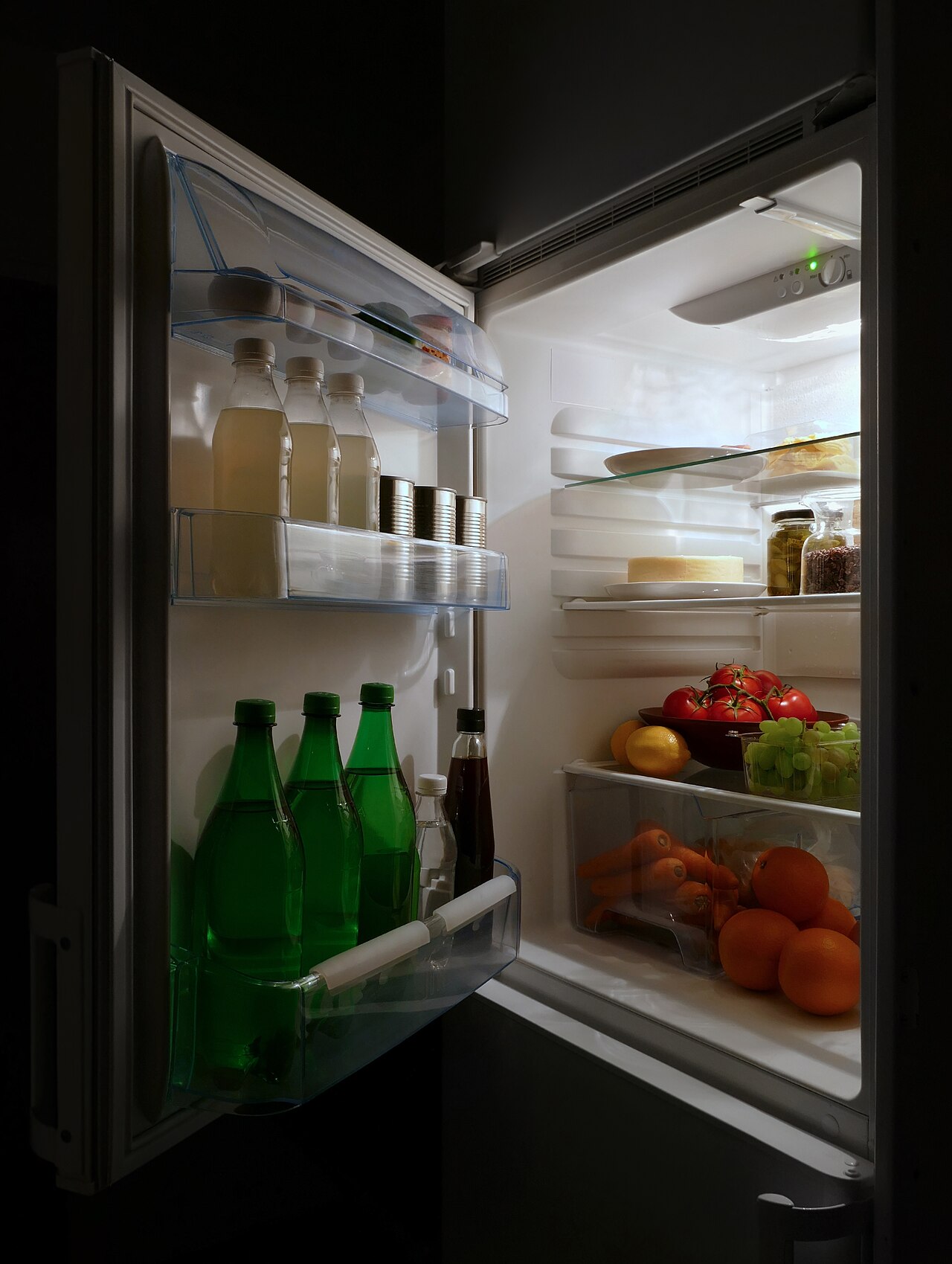
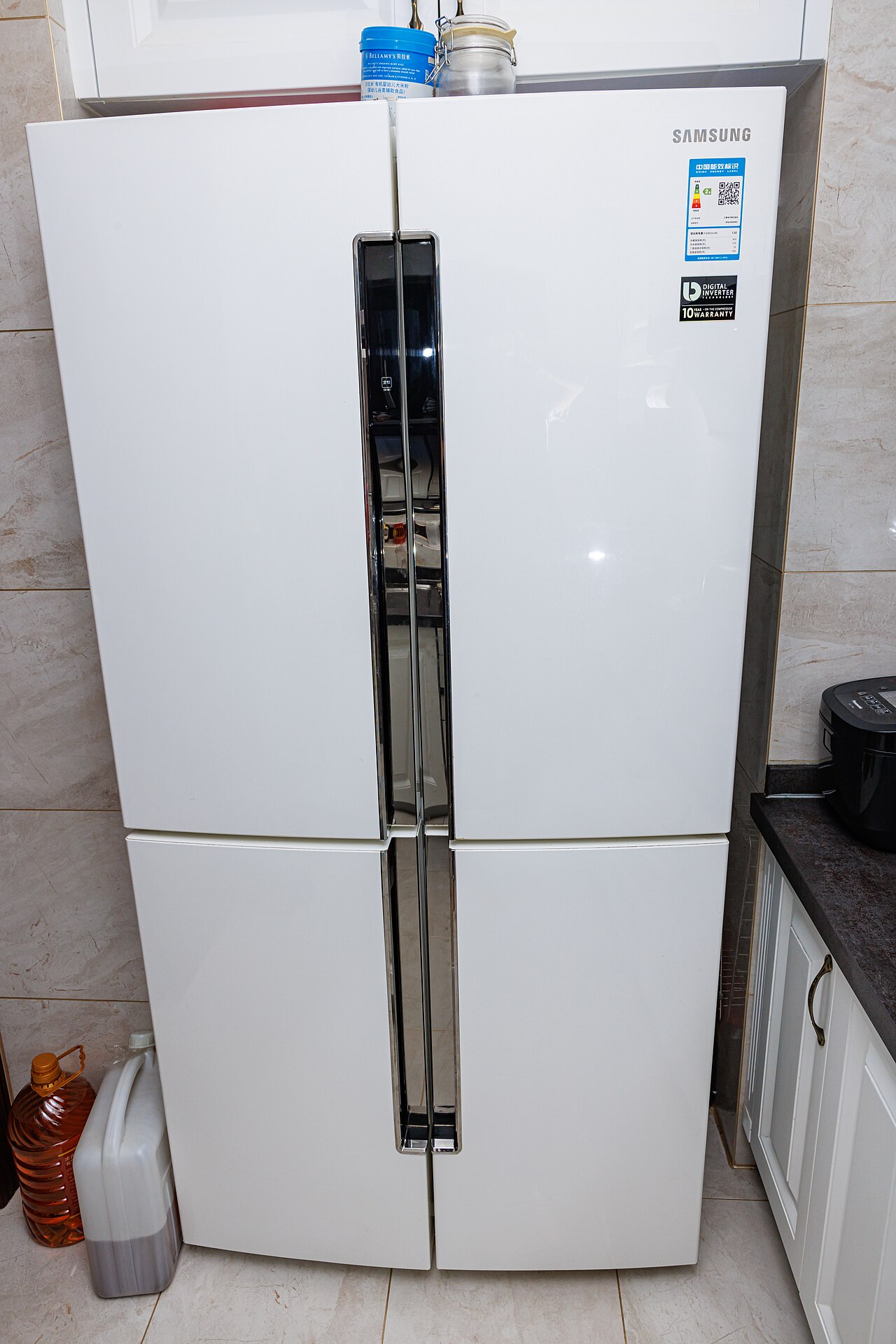
The open-fridge photograph makes the distinction between shelves, drawers and door storage visible. The four-door photograph shows a different external arrangement, but neither photograph depicts the RF522BRPX6 example. Its non-Australian label is not evidence of an Australian energy rating. Door count, finish and overall appearance cannot establish the internal volume split. Use the exact model's documentation for those figures and its applicable instructions for layout restrictions. An attractive image is useful for recognising an arrangement, not for transferring specifications between unrelated appliances.
Make a shortlist with two separate tests
First, compare documented refrigerator and freezer volumes against the storage problem you identified. Second, assess the usable arrangement for your actual containers and the model-specific installation requirements. A model can pass the first comparison and still fail the second because the layout or available space is unsuitable. Keep both results in the shortlist. Follow the official model link for the documented figures and current product status; obtain a current local quote only after the model and arrangement are established. Space & Cycle has not physically tested these appliances, and no price or stock claim is implied by this comparison.