Why one fridge can show two different energy figures
The same RF522BRPX6 documentation shows 376 and 467 kWh per year under different standards. Keep the test basis attached to each figure.
Updated:
Keep the standard beside the number
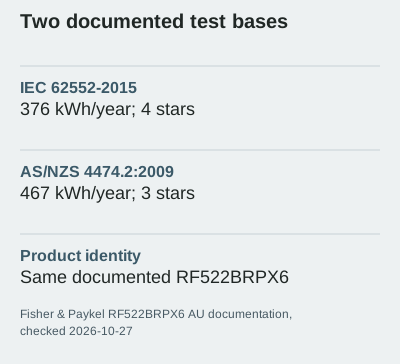
Two annual energy numbers on one refrigerator page need not mean that one is a typo. The Australian RF522BRPX6 page lists 376 kWh per year under IEC 62552-2015 and 467 kWh per year under AS/NZS 4474.2: 2009. It also associates different star ratings with those bases. The useful first step is to preserve each complete pair of number and standard. Choosing the smaller number without its context turns a documented distinction into a misleading comparison.
RF522BRPX6 documented specifications ? Annual consumption and star comparisons ?
Do not describe a test change as a saving
Subtracting the two values gives 91 kWh per year, but that arithmetic does not prove that a household will save 91 kWh by buying this refrigerator. Both entries describe the same documented model under different measurement frameworks. There is no before-and-after household experiment here. A real comparison needs another appliance's figure on a compatible basis, with relevant size and features considered. Space & Cycle has not measured either consumption result or established how either estimate matches a particular kitchen.
Show the consequence in an honest cost example
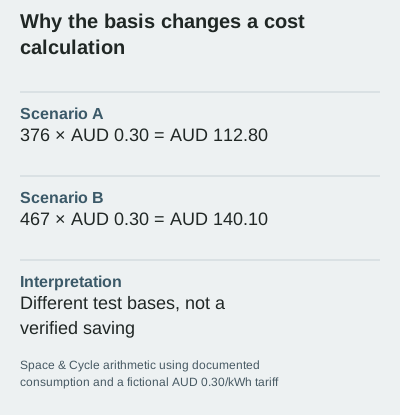
At a deliberately fictional flat tariff of AUD 0.30 per kWh, multiplying 376 by 0.30 produces AUD 112.80, while 467 multiplied by 0.30 produces AUD 140.10. The AUD 27.30 difference is an illustration of how the selected input changes a calculation. It is not a quoted electricity price, a forecast bill reduction or evidence that one test framework is more favourable for your home. Keep the two scenario labels visible instead of presenting the lower result as the expected running cost.
Photographs cannot settle a rating mismatch
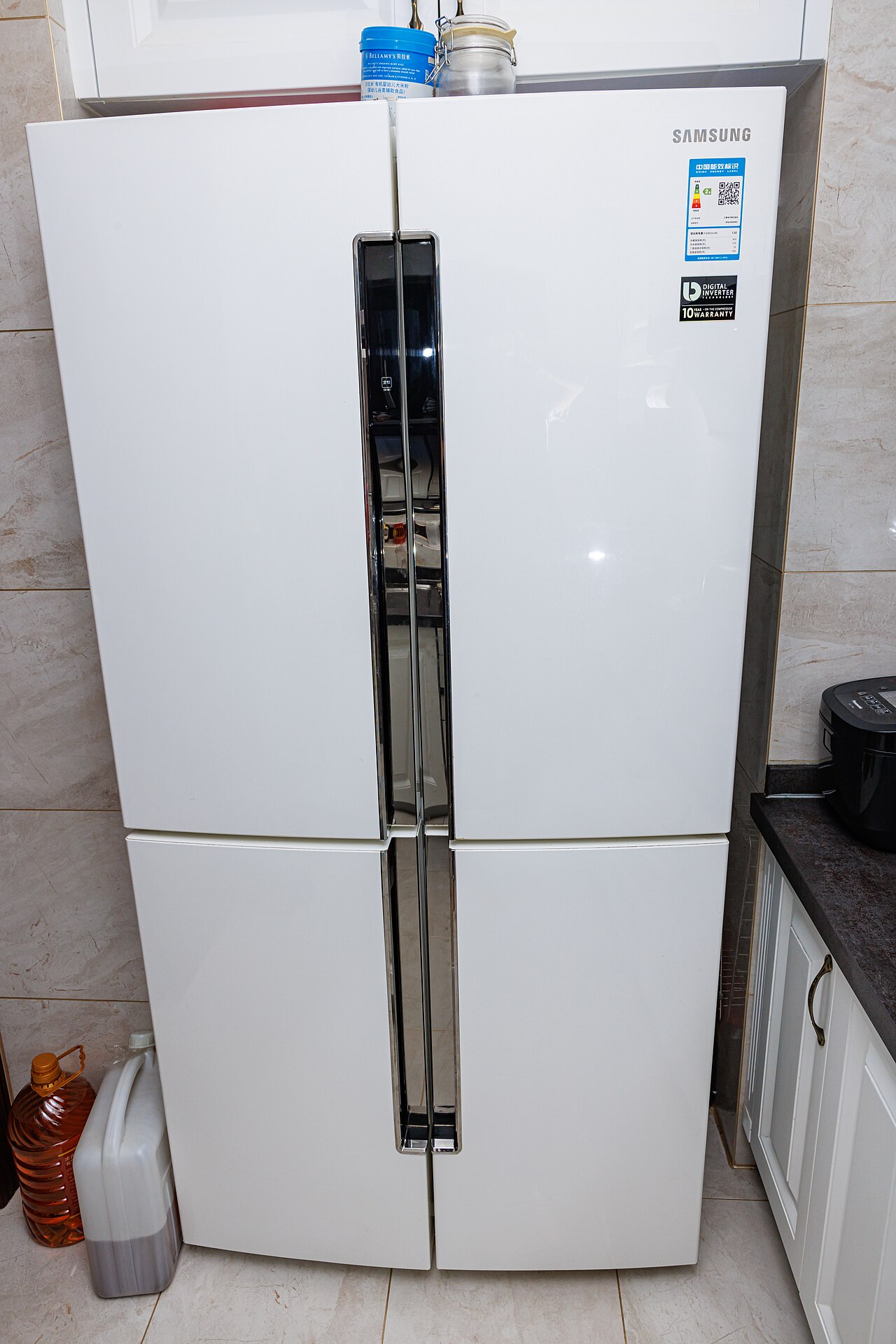
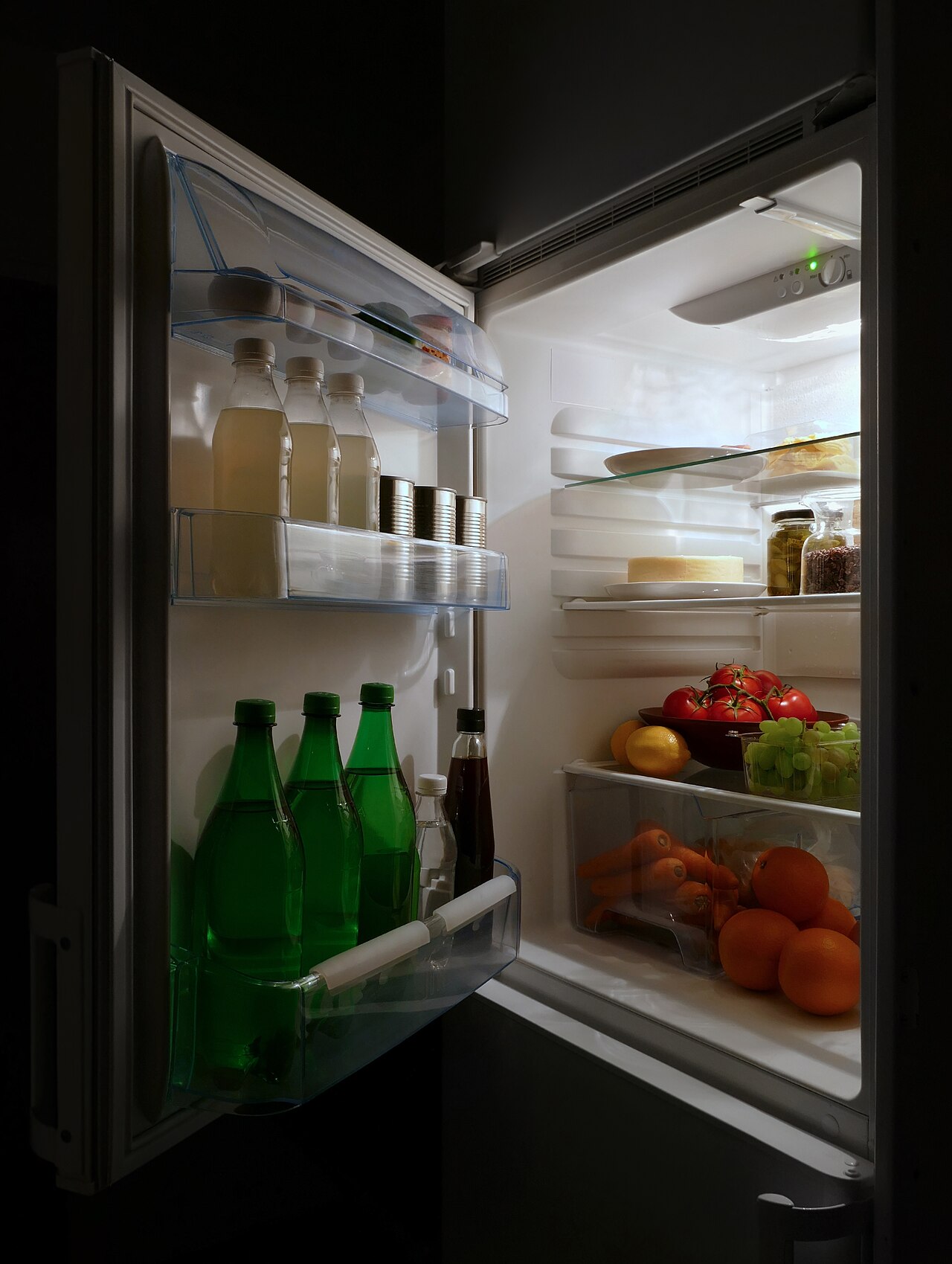
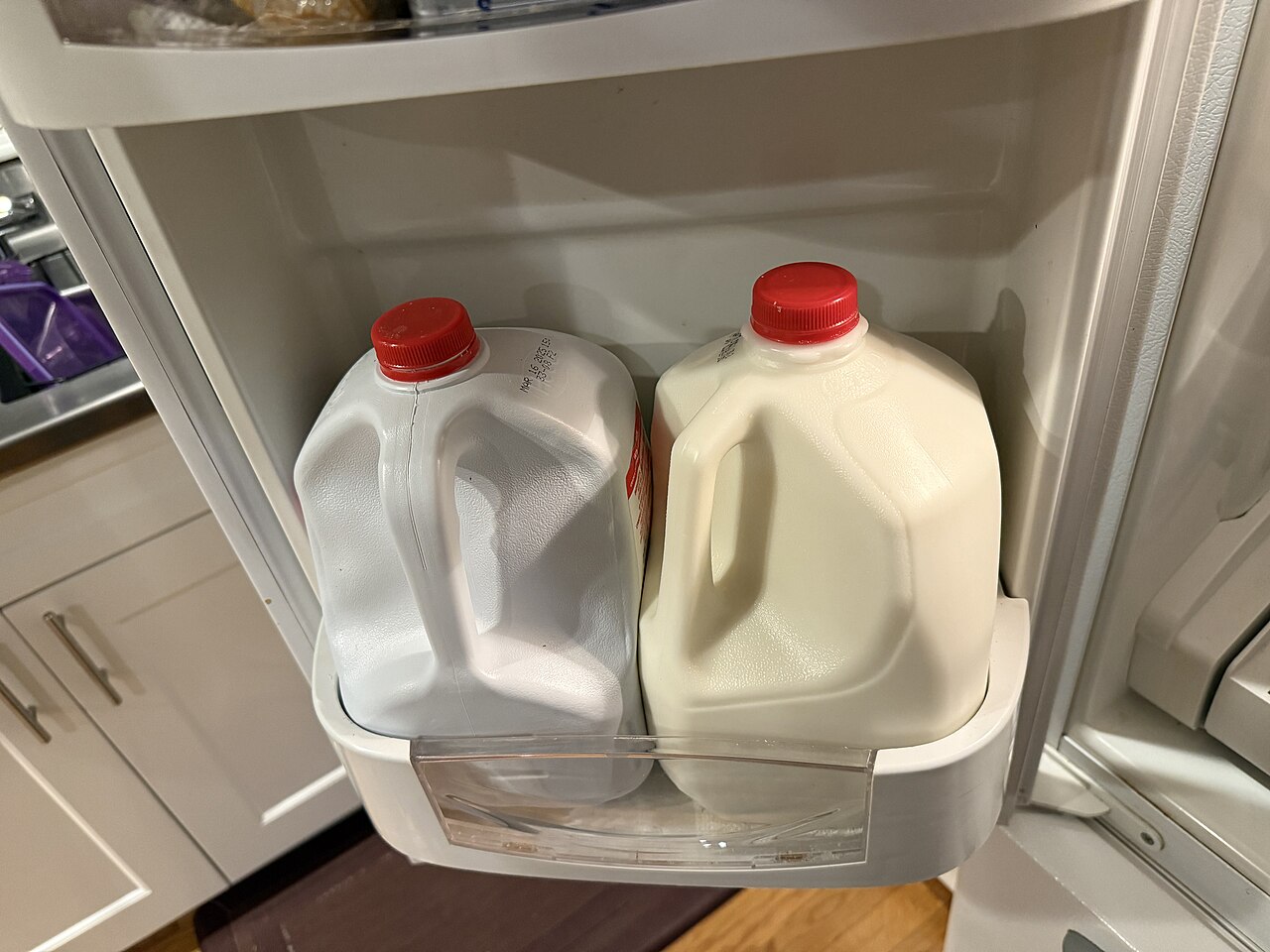
The four-door photograph accompanying this guide is a different refrigerator and includes a non-Australian label. It illustrates why a recognisable product image cannot authenticate the Australian rating for another model. The open-fridge photograph shows storage arrangements, not energy performance. Likewise, the close-fitting bottles in the door photograph reveal a physical layout constraint but cannot establish consumption. Use images for the questions they can answer and the exact local documentation for the energy comparison.
Build a comparison that can survive a source change
Use separate columns for exact model, annual kWh, test standard, star-rating basis and document date. If a retailer displays a value without the basis, leave that comparison unresolved until matching documentation is available. Do not silently copy the standard from another model in the same range. The government energy-label guide explains that annual consumption is a standardised estimate; actual use can differ. This makes the label useful for a controlled comparison while limiting what it can say about an individual bill.
Take the complete pair to the next decision
For this documentation example, retain both published entries and choose a compatible basis before comparing another model. The manufacturer currently marks RF522BRPX6 end of line, so this article does not imply local stock or a buying recommendation. Check the current exact-model documentation and use your own applicable tariff in the annual electricity tool. If the available sources cannot establish comparable test conditions, report that uncertainty instead of ranking the products by whichever isolated number looks smaller.
Open official model documentation ? Open official model documentation ?