A dryer label can assume one load a week
A dryer label's annual estimate can assume one use a week. Compare that basis with your routine before calling it a household running cost.
Updated:
Check the frequency behind annual consumption
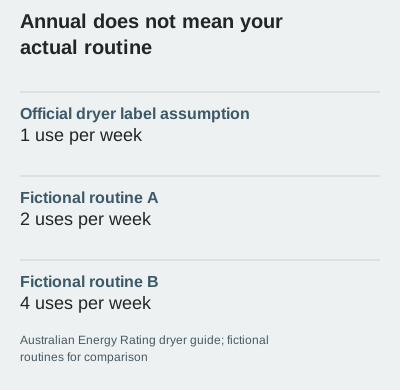
The Australian Energy Rating dryer guide explains that its annual consumption estimate assumes one use per week. A household drying clothes four times a week is asking a different question from that common comparison scenario. The word annual does not mean the number has been adapted to every user's routine. Keep frequency attached to the figure before comparing a purchase price with an apparent yearly running cost or deciding whether the displayed amount seems unusually low.
Dryer label programme and usage assumption ? WQG24200AU manufacturer catalogue energy basis ?
A dated model example makes the distinction concrete
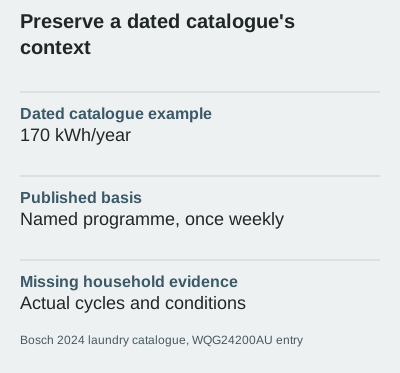
Bosch's 2024 laundry catalogue lists 170 kWh per year for WQG24200AU, with a named Cottons Cupboard Dry Plus setting, drying level 1, once-weekly use and the stated AS/NZS test basis. This is a dated documentation example. It is not a live stock feed or a measurement taken in your laundry. A newer manual may present a different programme table or testing context, so preserve the source and its conditions instead of silently joining values from separate documents.
Describe your routine before changing the estimate
Write down whether the appliance is intended for occasional wet-weather use, selected loads or most laundry. For a hypothetical household using it twice a week, the routine differs from the label's one-use assumption; a four-use household differs again. This comparison establishes a question about the input, not a verified multiplication rule. Loads, selected dryness, starting moisture and programme choice can also differ. Do not promise that doubling frequency produces an exactly doubled household bill without the evidence needed for that claim.
Use the real images for the features they show
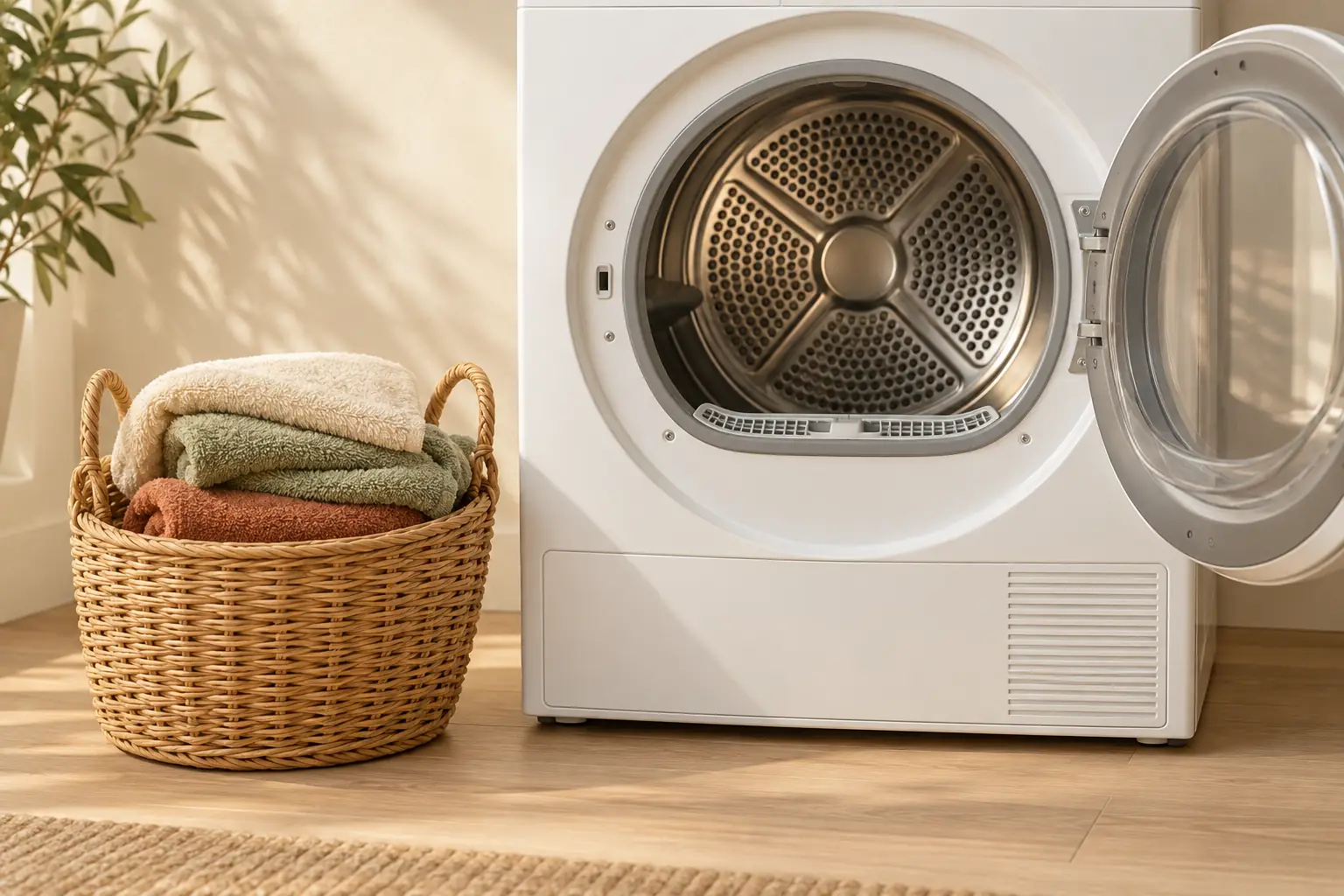
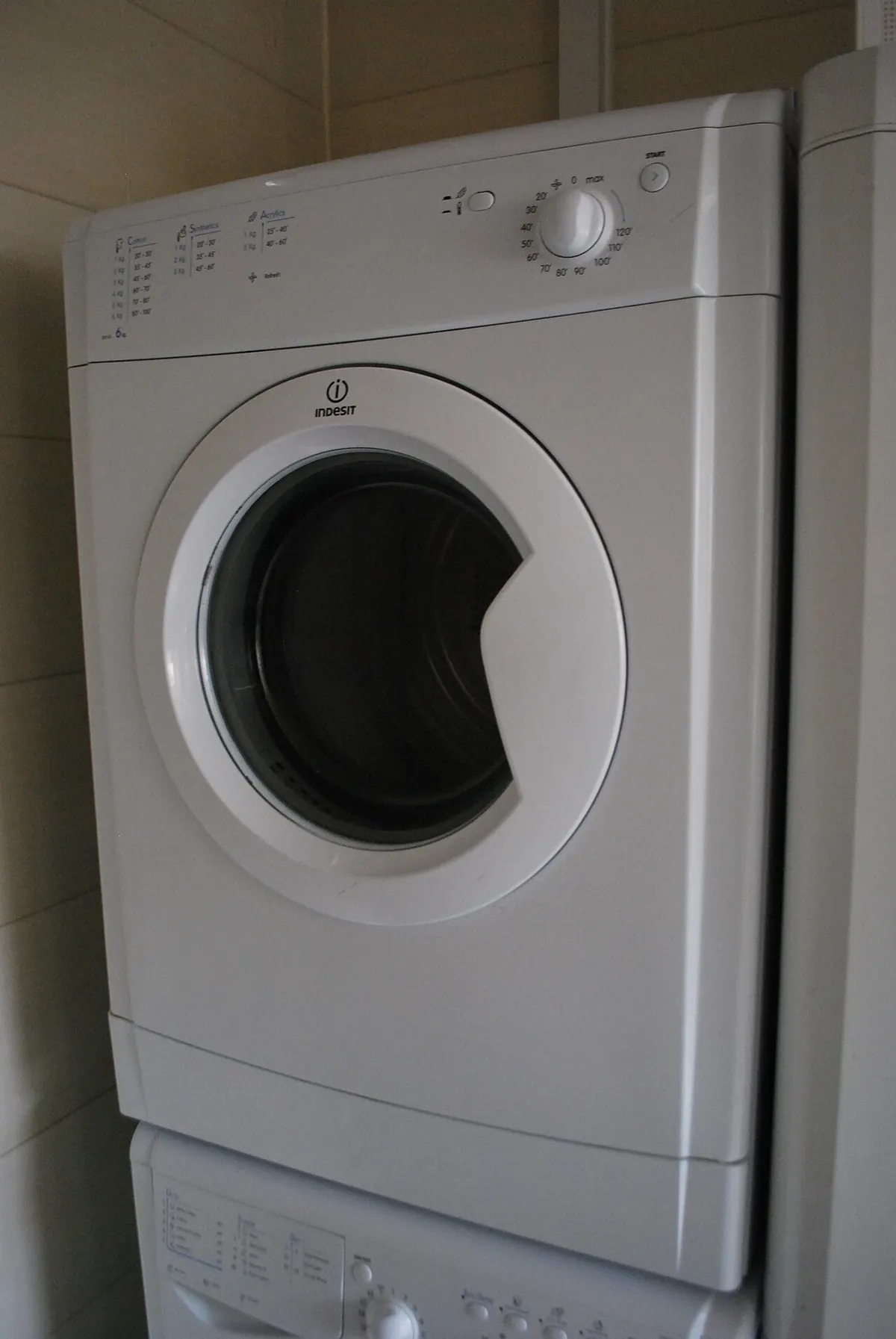
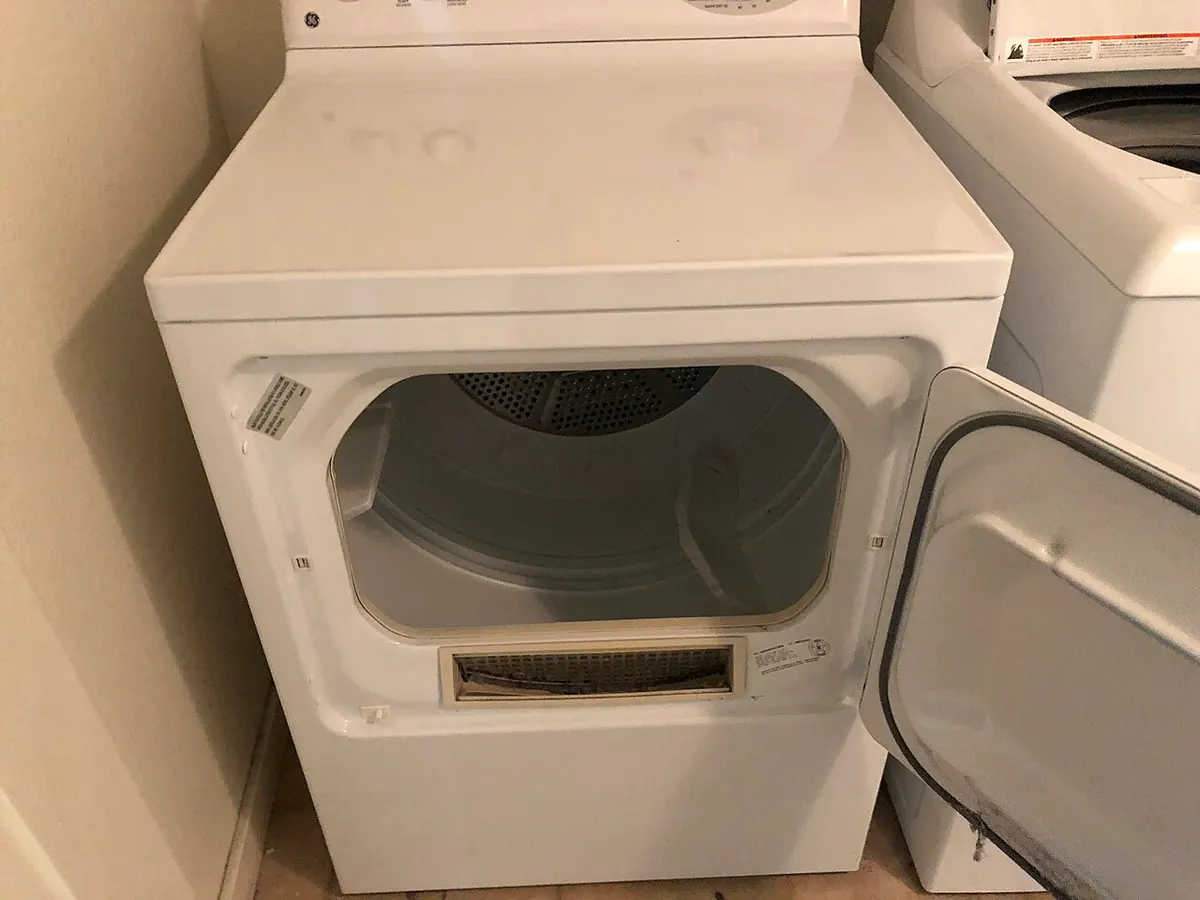
The Indesit photograph shows a visible selector, while the open GE dryer photograph shows the door and drum. Neither is the Bosch example, and neither demonstrates its annual consumption. They illustrate why the programme and actual model need to be identified separately from the broad category dryer. A dial setting on one machine cannot supply the testing basis for another. An open drum also gives no measured starting moisture or completed-load energy value, however familiar the appliance appears.
Keep a laundry pair from becoming a false energy shortcut
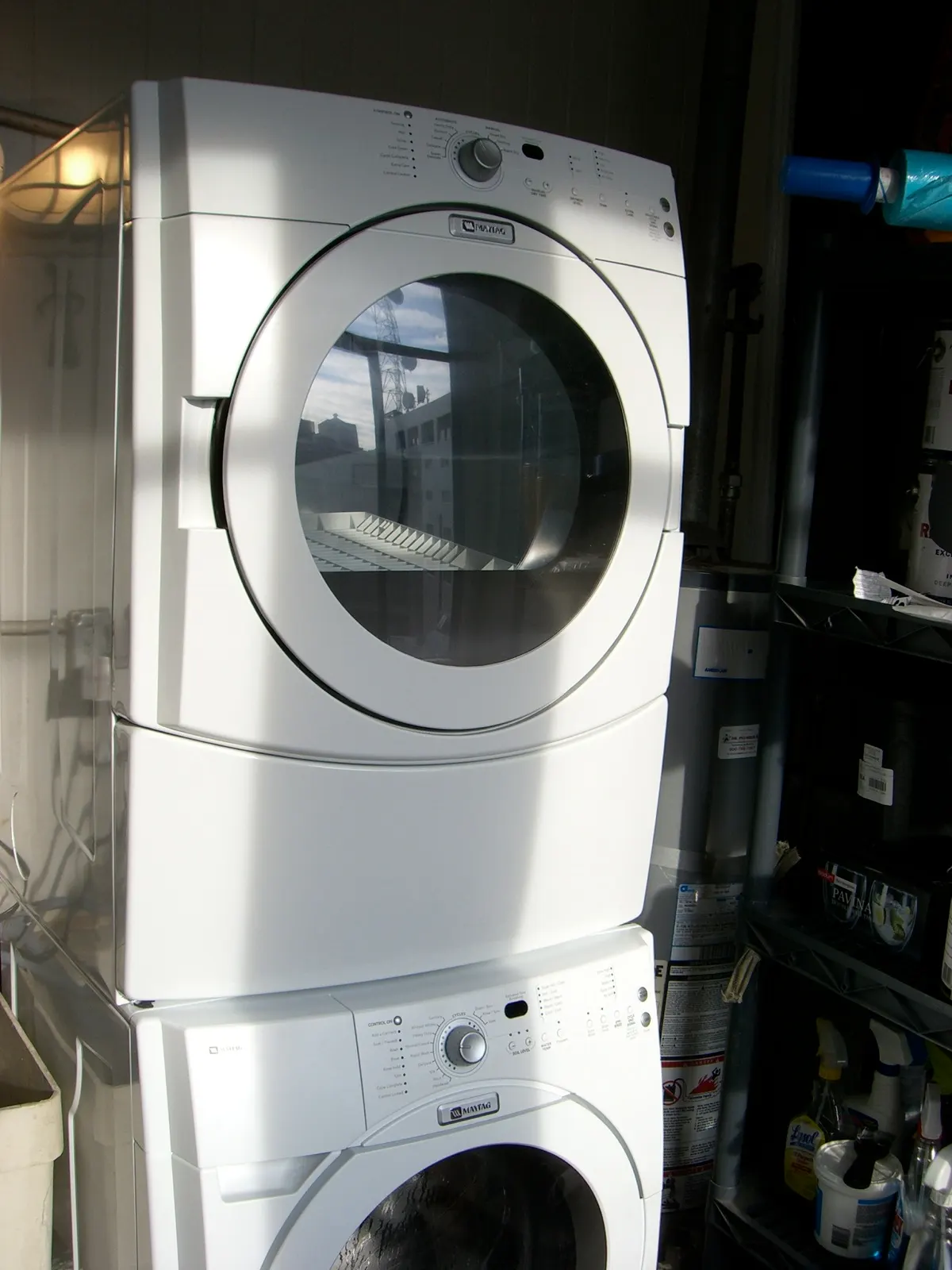
The Maytag laundry-pair photograph shows two separate appliances. Their appearance together does not establish matched capacity, an approved stacking arrangement or the energy used to wash and dry a load. Assess each function's evidence independently. If comparing a combined washer-dryer, obtain the applicable information for both functions rather than treating a single figure as the cost of the whole laundry process. This guide does not assess the photographed installation or recommend copying it in another home.
Make the uncertainty useful to the purchase decision
Use the annual label for comparisons on a compatible basis, and create a separate household scenario only when its inputs are defensible. Record the programme, frequency assumption, document date and source beside the kWh figure. If your expected routine differs substantially, ask for applicable per-cycle documentation or use clearly labelled scenarios rather than a guaranteed bill prediction. The next decision is whether the available evidence supports your intended use; a neat annual number alone cannot answer that question.
Open official model documentation ? Open official model documentation ?