Build a dryer electricity scenario from a documented input
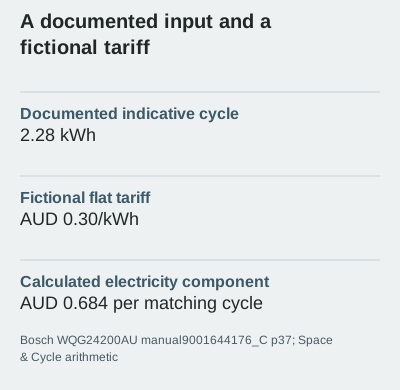
Use a documented 2.28kWh cycle input with an explicitly hypothetical tariff and schedule. Keep the test conditions beside the calculated AUD result.
Updated:

Start with one complete documented test row
The WQG24200AU manual provides an indicative 2.28 kWh cycle value for a specified Cottons Cupboard Dry row: 9 kg load, 1000 rpm prior spin, 60% initial moisture and the listed dryness condition. Its programme duration is 4 hours 15 minutes. These conditions belong with the number. The manual says actual values can differ. This is a stronger starting point for a transparent scenario than guessing consumption from a dryer's appearance, but it still does not measure the appliance's use in your home.
WQG24200AU programme limits and indicative cycle energy ?
Keep the tariff openly hypothetical
Using a fictional flat electricity rate of AUD 0.30 per kWh, the multiplication is 2.28 × 0.30 =AUD 0.684 per matching cycle. Rounded for display, that is approximately AUD 0.68. The tariff is not a current offer, a national average or a verified rate for your address. Replace it with the applicable variable rate from your own plan when making a personal scenario. Do not add the entire household supply charge to each cycle or describe this electricity component as the full cost of operating a home.
Extend the schedule only as an explicit scenario
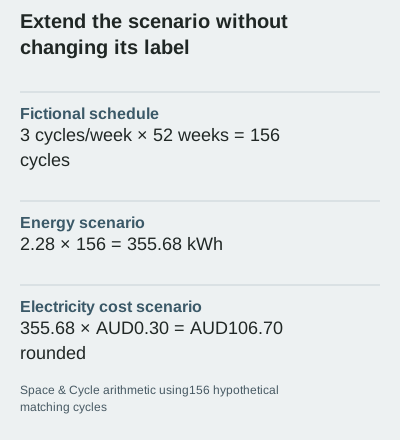
For three hypothetical matching cycles each week over 52 weeks, the count is 156 cycles. Multiplying 156 by 2.28 gives 355.68 kWh; multiplying that byAUD0.30 givesAUD106.704, orAUD106.70 rounded. This annual scenario is not the manufacturer's annual energy-label value. It is our calculation using a documented cycle input and fictional schedule. Keep that distinction in the chart title so the calculated total cannot be mistaken for an official rating when copied or compared elsewhere.
The test conditions explain the limit of the result
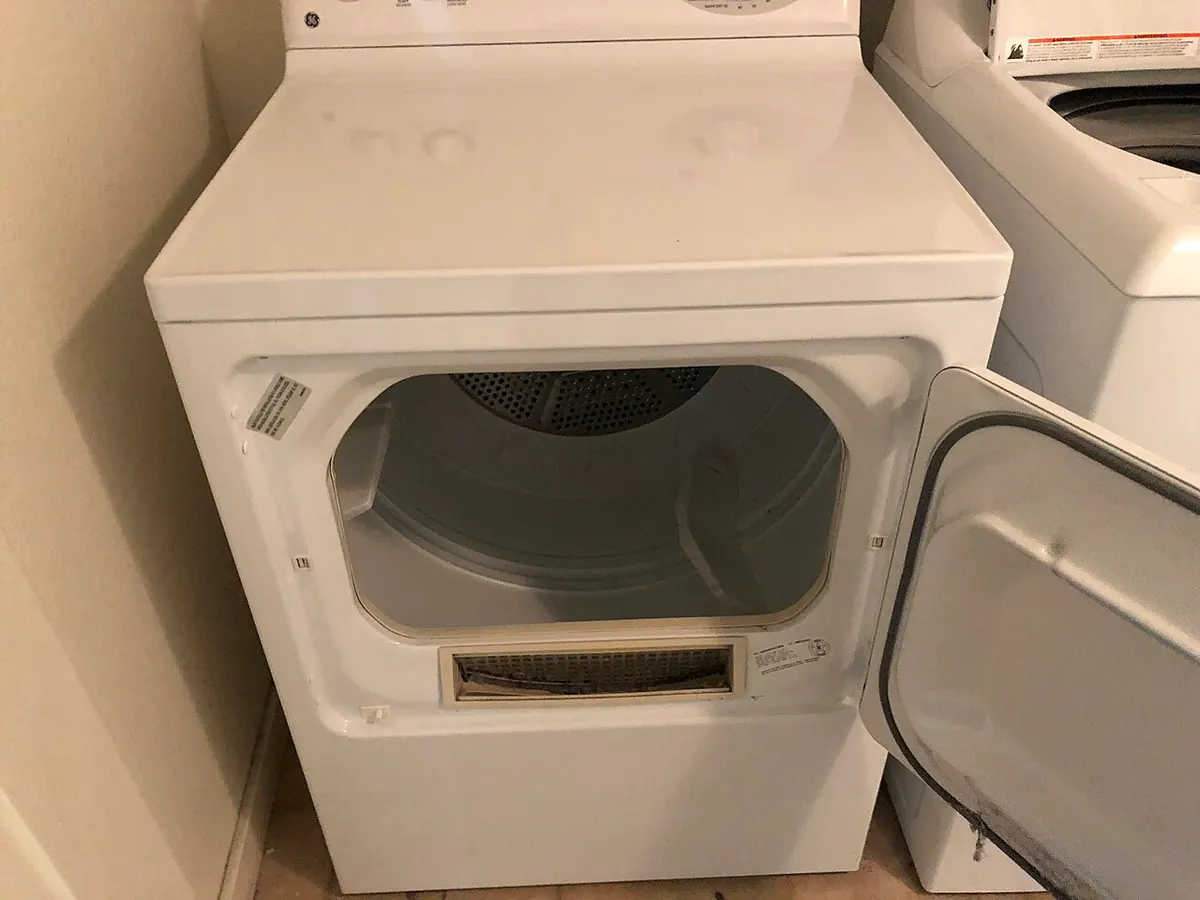
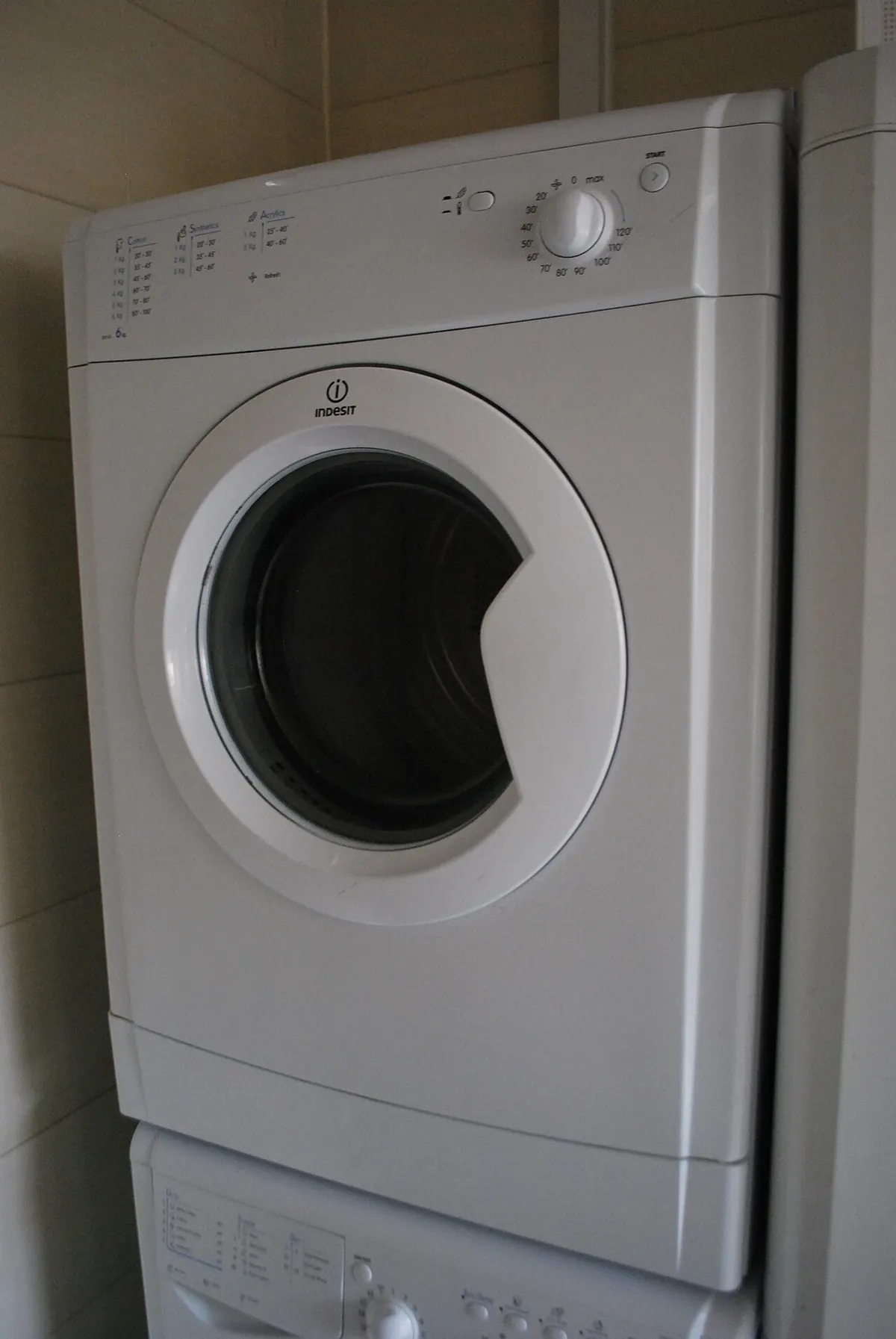
A different load, initial moisture or selected dryness can change consumption, so the scenario should not be sold as a guaranteed cost for any load placed in the drum. The real GE open-dryer image shows where laundry is loaded, but it does not depict the Bosch test or establish any energy measurement. The Indesit selector image likewise belongs to a different machine. Neither photograph validates the 2.28 kWh input; the exact-model manual is the evidence for that value and its conditions.
Avoid a false whole-laundry total
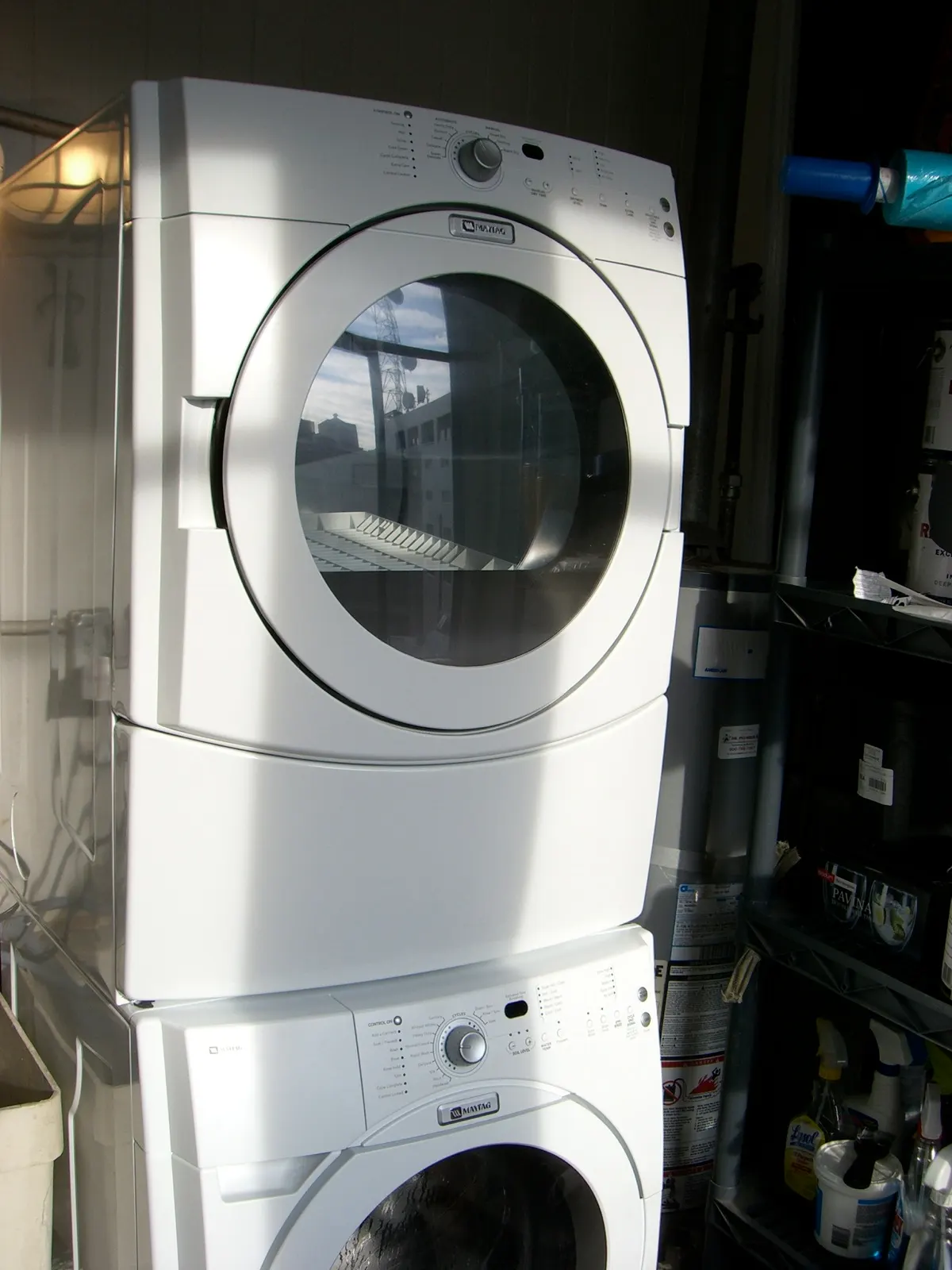
The Maytag pair photograph shows separate washing and drying appliances. The cost above includes only the stated dryer-cycle electricity scenario. It does not include a washing cycle, detergent, purchase cost, maintenance or fixed electricity charges. If comparing complete laundry routines, calculate relevant components separately with their own documented or clearly hypothetical inputs. Combining unrelated annual label assumptions can make an apparently complete total less informative than a narrower calculation that clearly states what it includes.
Change one input and preserve the record
Save the programme row, manual identifier, tariff, cycle count and rounding convention with the result. If the tariff changes, recalculate that input while leaving the documented test conditions visible. If the programme changes, first obtain an applicable consumption input rather than retaining this one by convenience. The result is useful as a transparent planning scenario with known assumptions. It becomes misleading when its conditional nature disappears and it is presented as an actual bill forecast or evidence from a physical test we did not conduct.