Place settings and litres per wash answer different questions
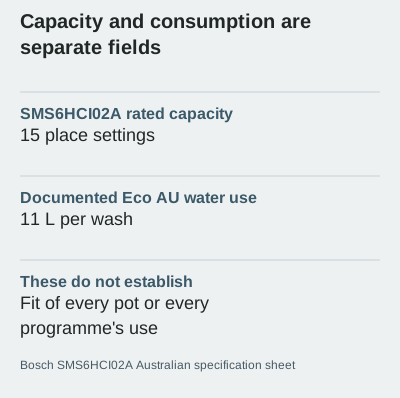
Fifteen place settings and 11 litres per wash describe different properties. Compare loading needs separately from the tested water-use figure.
Updated:
Read capacity and consumption as different answers
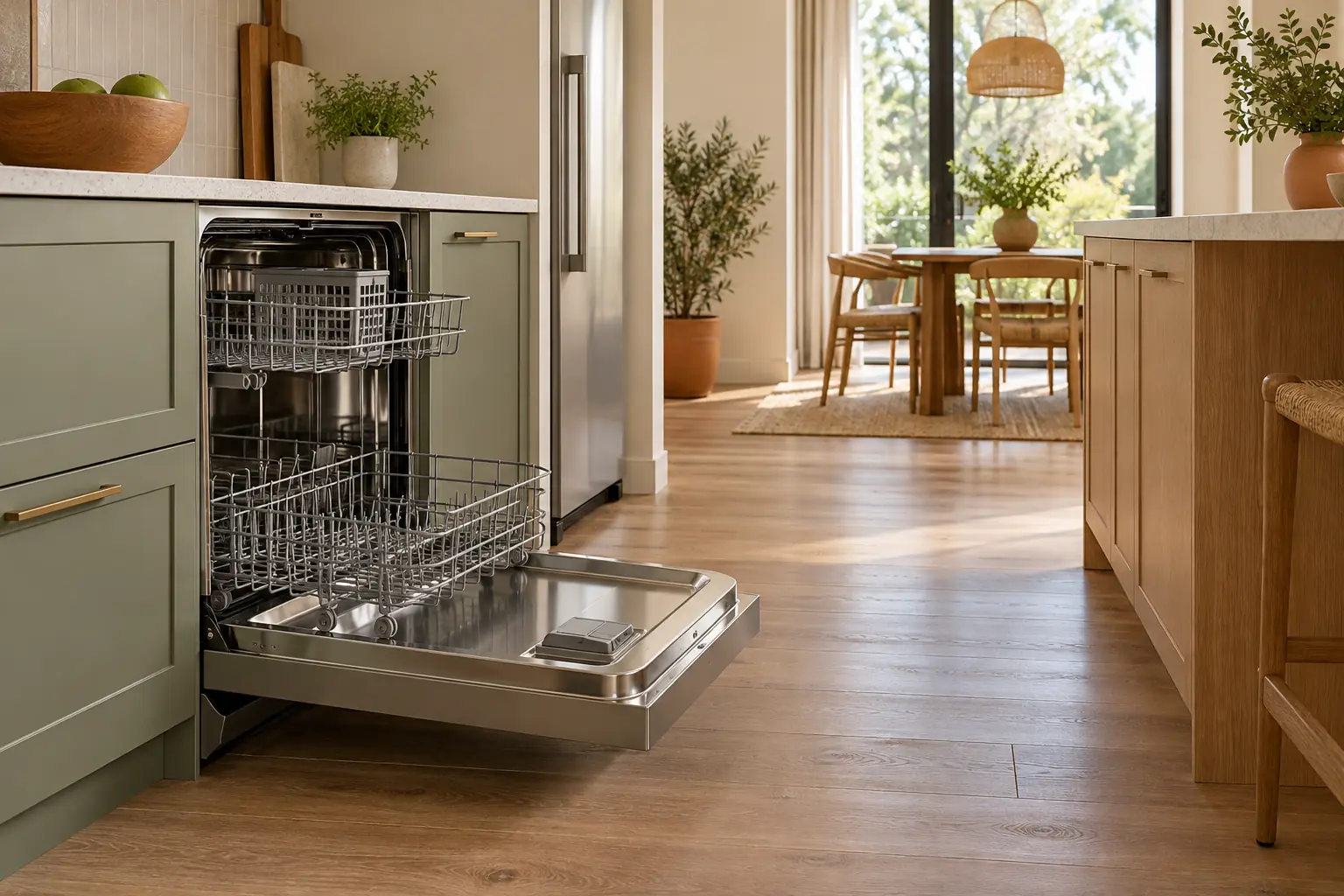
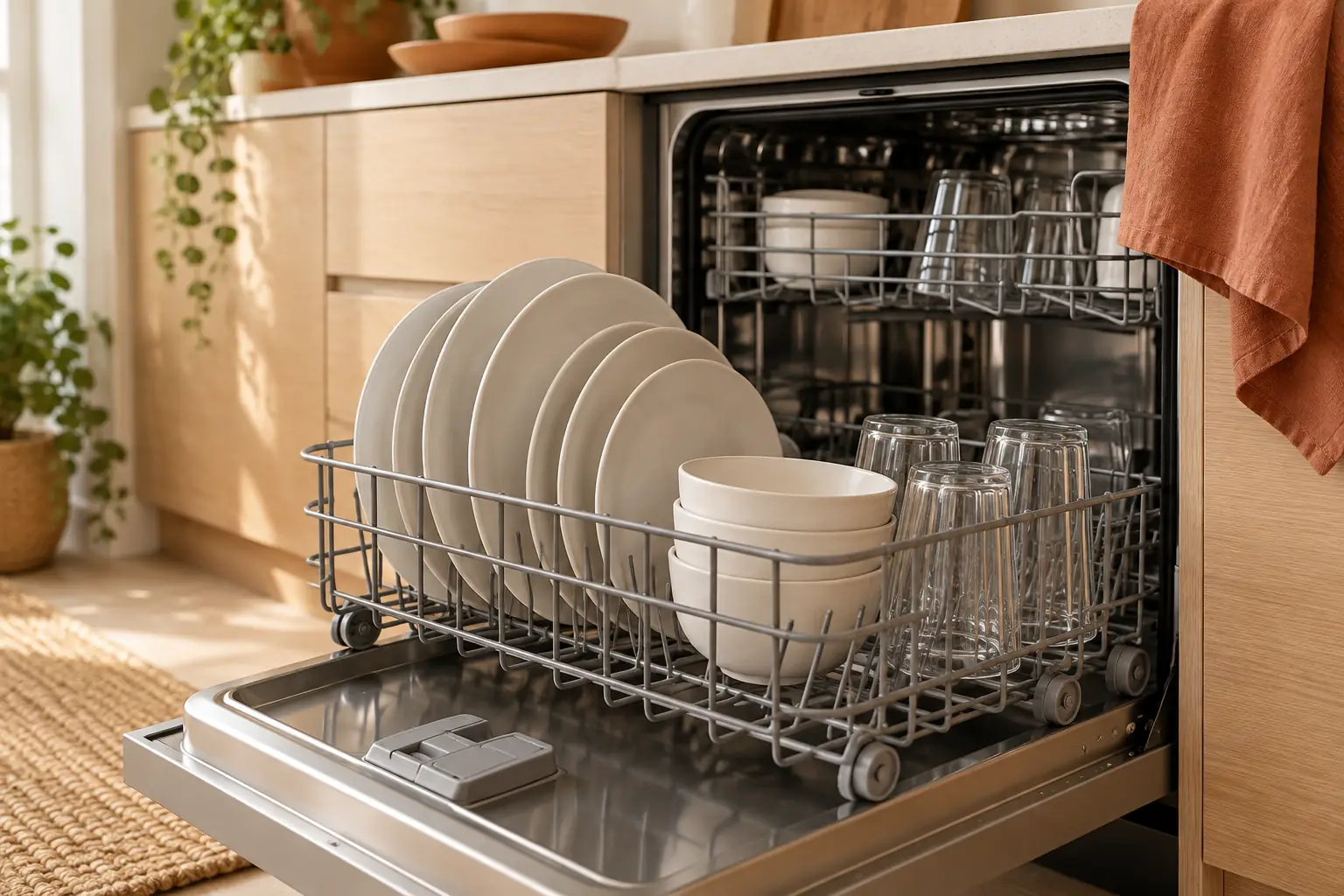
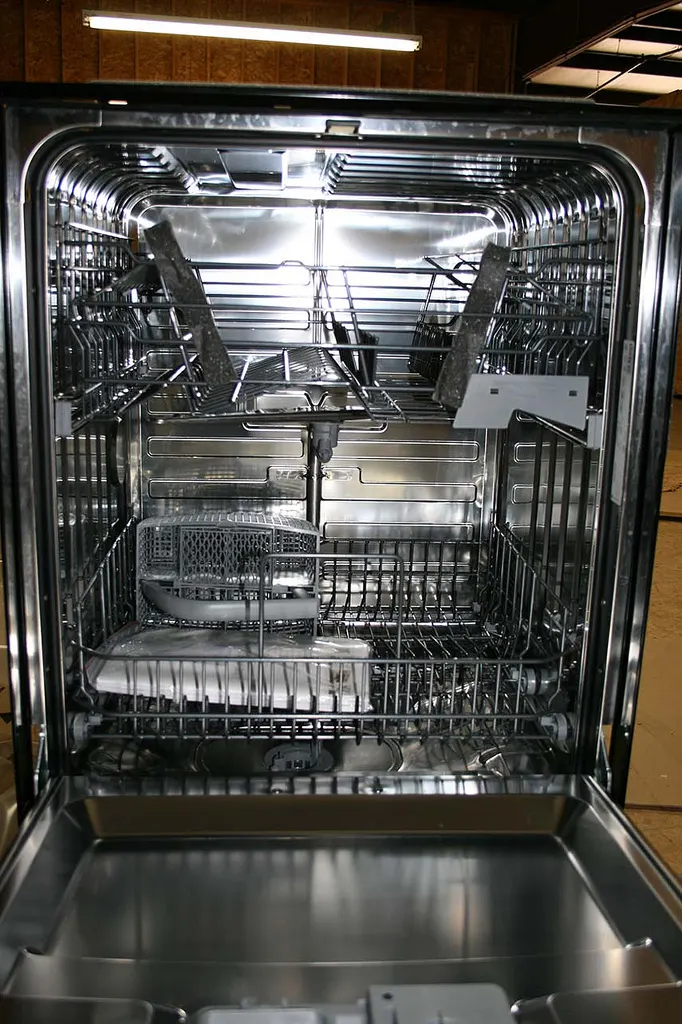
The SMS6HCI02A specification sheet lists 15 place settings and 11 L per wash for Eco AU. Place settings describe rated loading capacity; litres per wash describe water consumption under the named condition. One cannot replace the other. A shopper choosing between products needs both the practical loading question and the resource-use question. The empty-rack photograph helps show why a volume of open space is not automatically equivalent to the arrangement of a particular set of dishes.
SMS6HCI02A official AU specification ? Dishwasher capacity and label basis ? Water label fields ?
A place setting is a defined collection
The Australian Energy Rating dishwasher guide explains place settings through a collection of plates, bowls, drinking items and cutlery. This standardised description supports comparison, but it is not the same as counting every object in your kitchen as one place setting. A large roasting dish, tall bottle or unusually shaped pan raises a different fit question. List the items that make your current arrangement difficult and assess the exact candidate's rack configuration, following its loading instructions rather than assuming a headline capacity answers every shape problem.
Treat the real loaded rack as a layout example
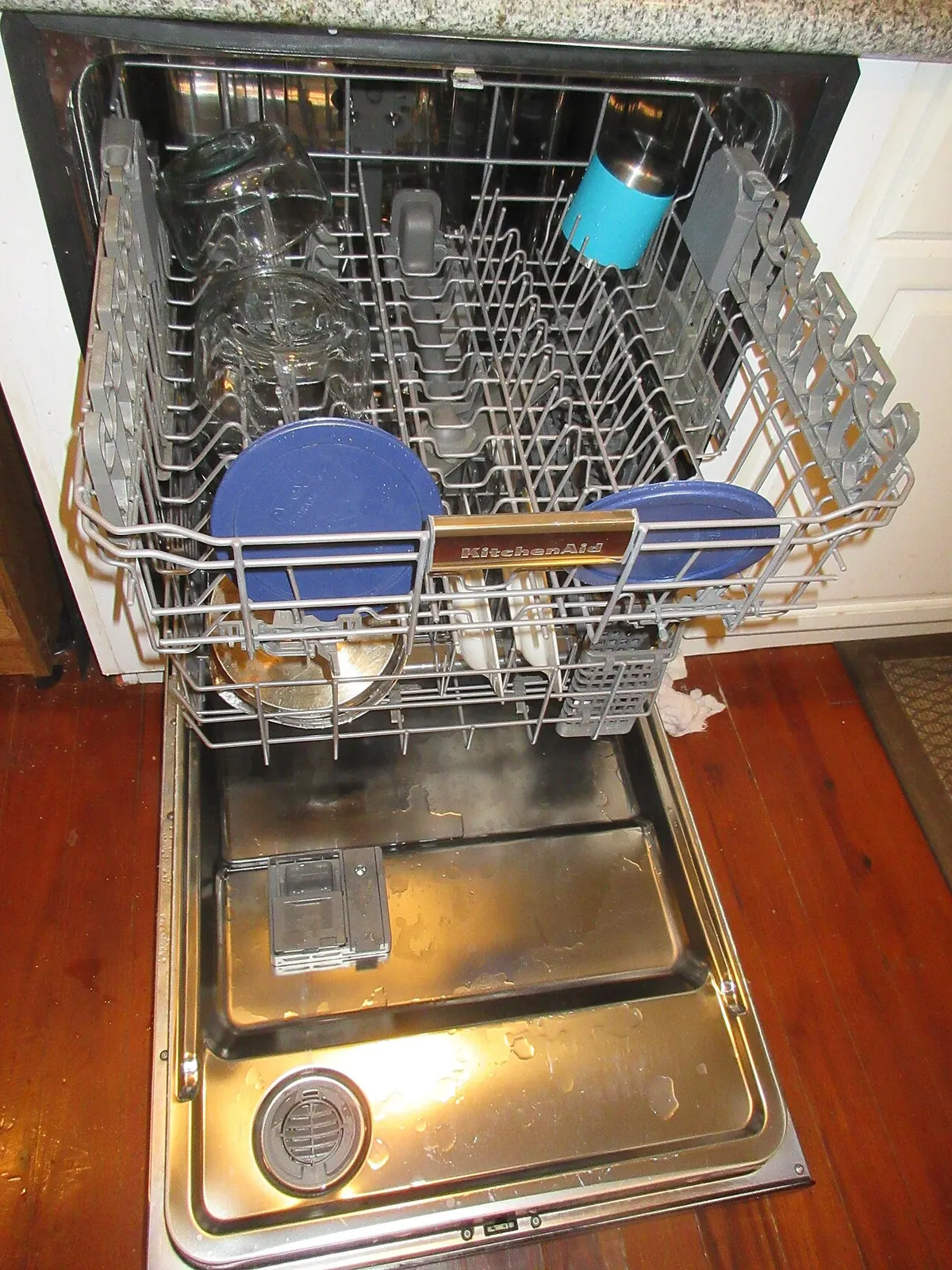
The KitchenAid photograph shows real dishes and glasses in an extended rack. It does not show an official capacity test or the Bosch example model. Its usefulness is visual: handles, rims and uneven shapes occupy space differently. Do not count the objects in the photograph and convert that count into a rating for another machine. Likewise, a generated editorial image can introduce the topic but cannot demonstrate that a particular load has been safely or effectively washed.
The water number needs its programme attached
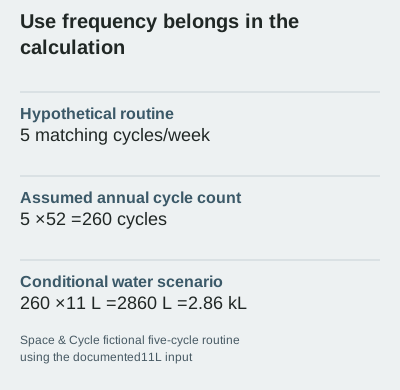
WELS explains that washing-machine and dishwasher labels identify the model and cycle used for testing. Retain Eco AU with the documented 11 L value in this example. If using five hypothetical matching cycles weekly for 52 weeks, the calculation gives 260 cycles and 2860 L, or 2.86 kL. This is a conditional water-use scenario, not evidence that every programme consumes 11 L. It also says nothing about detergent, electricity or whether the chosen programme is suitable for every item placed in the racks.
Control symbols do not replace the label record
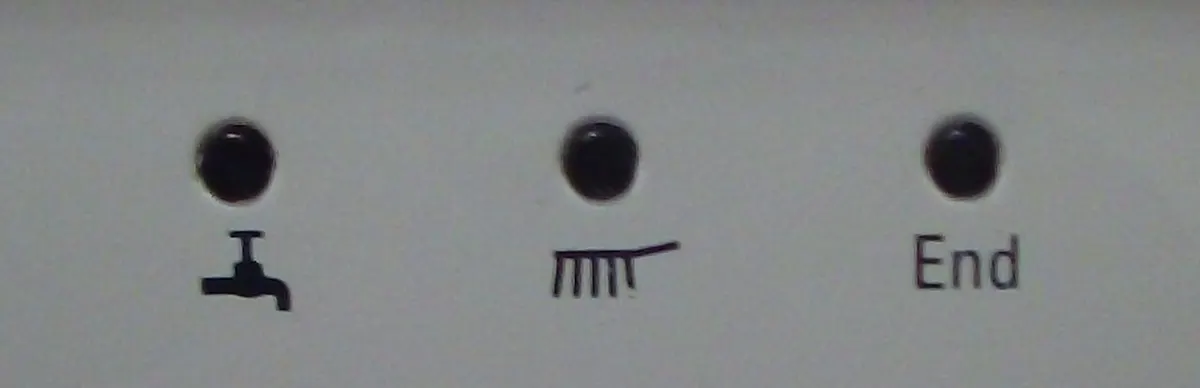
The separate Siemens indicator photograph is not an Australian water-rating label and is not the Bosch model. A water-related symbol on an appliance can be a status indicator rather than a consumption figure. For efficiency comparisons, identify the actual registered model and applicable label information instead of interpreting an unfamiliar symbol from an image. If the documentation and product identity do not match, resolve that discrepancy before ranking candidates by the number of stars or litres displayed elsewhere.
Build a shortlist with two independent tests
First, determine whether the actual rack arrangement can accommodate the items central to your routine under the manufacturer's instructions. Second, compare documented consumption on an appropriate basis. A model can appear attractive on one test while leaving the other unresolved. Keep the 15-place-setting entry and 11 L Eco AU entry in separate columns, with the checked source and programme. Then add a clearly stated usage scenario if useful. This approach exposes the trade-off without pretending that capacity, cleaning results and annual water costs are all the same measurement.
Open official model documentation ? Open official model documentation ? Open official model documentation ?