Calculate a dishwasher cycle scenario without inventing a tariff
Combine a documented water input with a clearly stated tariff, and keep annual energy costs separate from a claimed measured per-cycle bill.
Updated:

Do not mix annual energy with per-cycle water
An appliance specification can publish resource figures on different time bases. The SMS6HCI02A sheet gives 245 kWh per year for its stated seven-Eco-AU-programmes-per-week basis and 11 L water per wash on Eco AU. One value is annual and the other is per cycle. Adding 245 to 11 would have no meaningful unit. Even converting both into AUD does not fix an unstated time mismatch. Name the period and test condition before attempting a combined running-cost comparison.
SMS6HCI02A official AU specification ? Dishwasher capacity and label basis ?
Calculate the annual electricity component explicitly
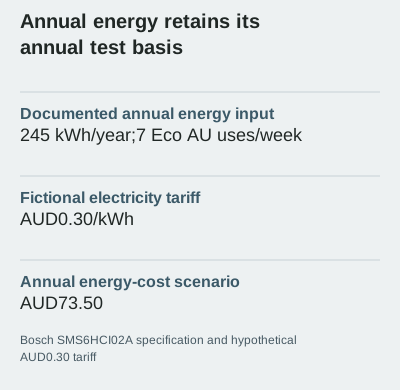
At a fictional flat tariff ofAUD0.30 per kWh, 245 kWh multiplied by 0.30 givesAUD73.50. The figure keeps the manufacturer's annual usage basis, including the stated programme and cold connection. It is not a rate quoted for an Australian address or a measurement of your dishwasher use. The government dishwasher guide also explains the seven-uses-weekly label assumption. If your routine differs, avoid presenting this unchanged annual result as a personalised bill forecast.
Convert the water unit before using a tariff
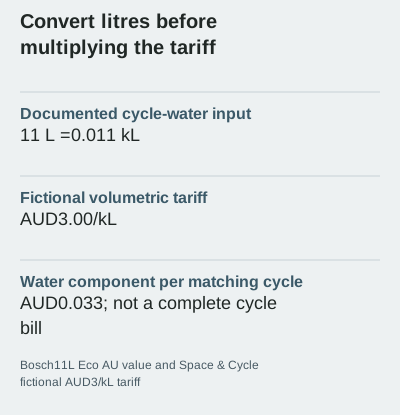
For the water component, 11 L equals 0.011 kL because 1000 L make 1 kL. At a deliberately fictional volumetric rate ofAUD3.00 per kL, the multiplication givesAUD0.033 per matching cycle. That is 3.3 cents of the modelled water component, not a complete operating cost. The tariff is illustrative rather than a current local quote. Fixed service charges and other bill components require their own treatment; they do not automatically scale with the number of cycles run.
Keep rounding from hiding the scale
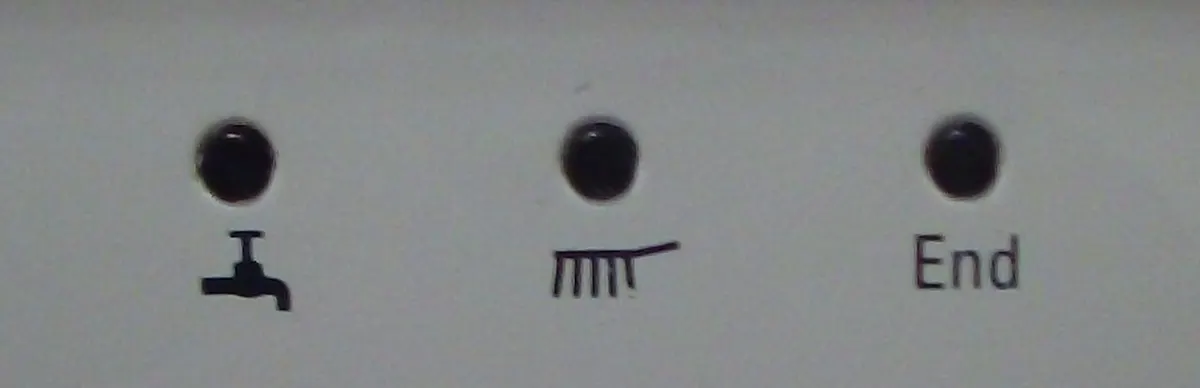
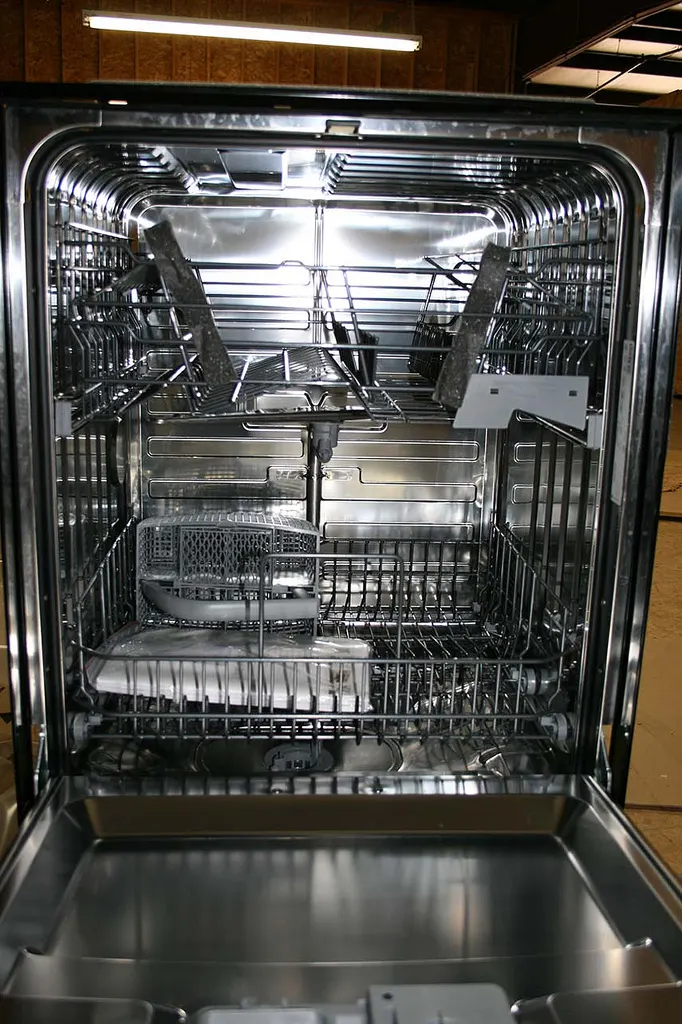
RoundingAUD0.033 to whole dollars would display zero and conceal a nonzero component. Retain sufficient precision for the comparison, then round the final relevant total consistently. Conversely, many decimal places do not make hypothetical inputs more accurate. The Siemens indicator photograph demonstrates a visible control detail, not a metering instrument or billing result. The empty-rack image likewise provides no measured consumption. Exact arithmetic and uncertain real-world inputs can coexist, and the presentation should make both visible.
Do not call an annual average a measured cycle
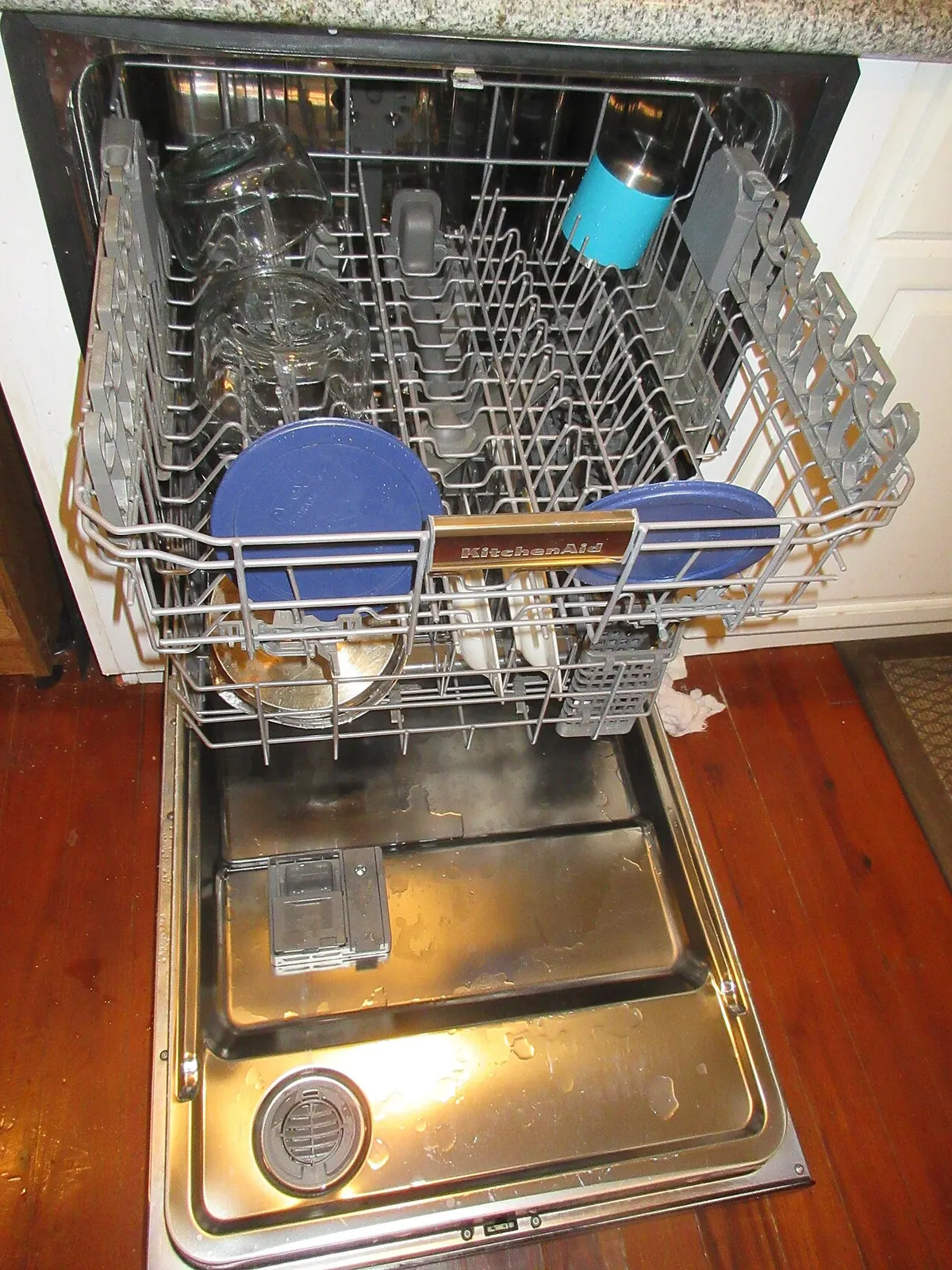
Dividing an annual estimate by an assumed cycle count may produce a useful average allocation, but it is not automatically a measured per-cycle result for every programme. If a cycle-cost question requires that precision, look for applicable per-cycle documentation and its conditions. The loaded KitchenAid image shows a different machine and load, so it cannot validate the Bosch estimate. This guide deliberately keeps the annual electricity scenario and the per-cycle water component labelled separately rather than merging them into an unsupported all-in cycle price.
Use the comparison to identify the missing inputs
A complete personal scenario would need an appropriate usage schedule, applicable resource rates and a clear decision about included costs. Detergent, purchase price and maintenance are additional questions, not hidden parts of the two calculations above. Use the annual electricity and cycle-water tools for their stated scopes, preserve the source conditions and replace fictional tariffs with your own verified inputs. If comparable information is missing for another candidate, leave that component unresolved rather than assigning a reassuring zero or copying a different model's value.
Open official model documentation ? Open official model documentation ?