Turn annual kWh into a transparent AUD cost scenario
Multiply annual kWh by an applicable AUD-per-kWh rate, then keep fixed charges, usage assumptions and tariff differences outside the simple result.
Updated:

Use a formula whose units cancel cleanly
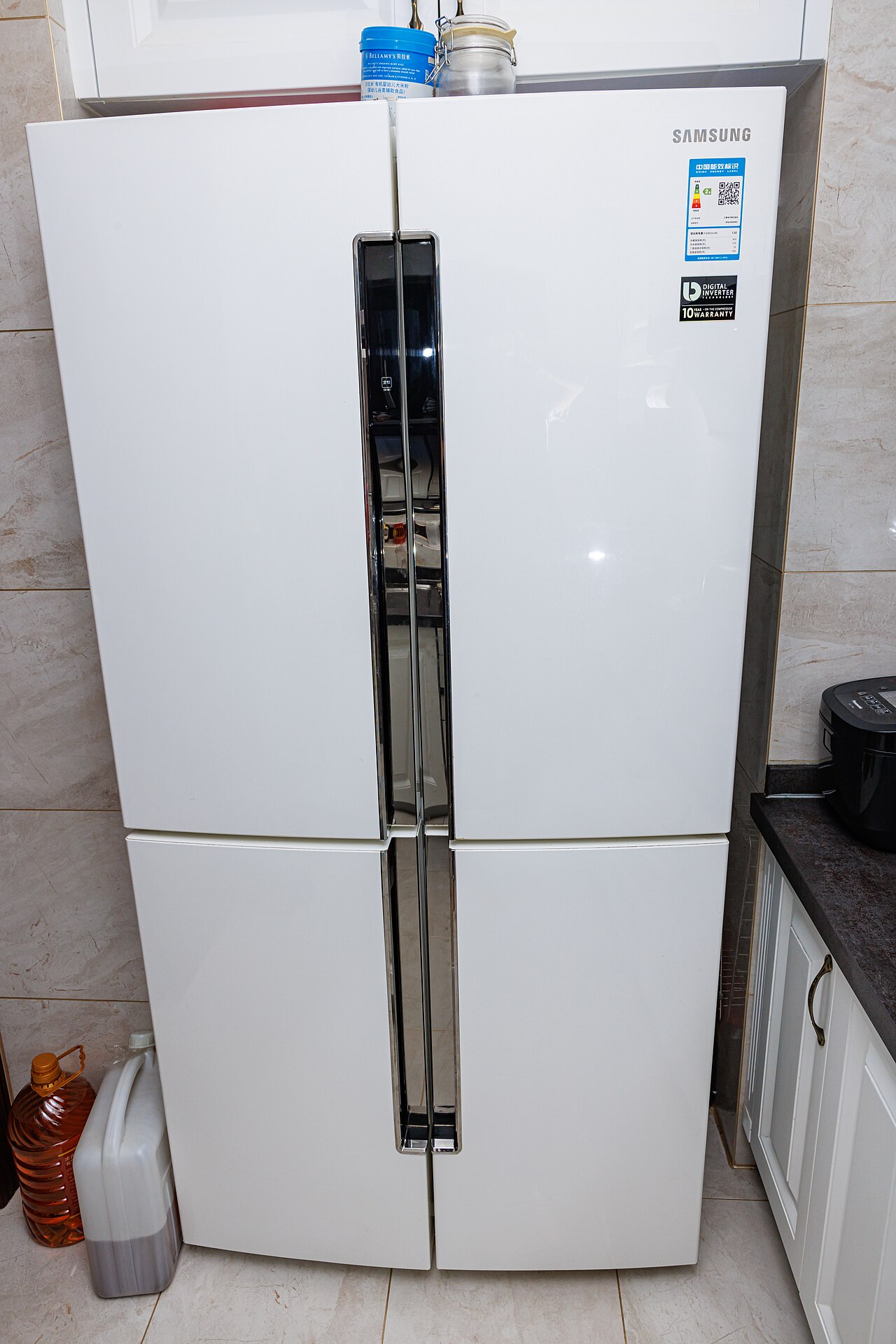
Annual energy in kilowatt-hours multiplied by an applicable variable electricity rate in Australian dollars per kilowatt-hour gives an annual electricity-cost component. The Energy Rating guide describes this basic approach. For a fictional 200 kWh annual input andAUD0.30 per kWh, the result isAUD60. The units matter: entering 30 as dollars instead of 30 cents would make the result one hundred times larger. Convert a cents-per-kWh rate into dollars before using the annual electricity tool, and check the displayed unit beside each field.
Annual consumption and star comparisons ?
Compare two fictional inputs on the same basis
Suppose a second fictional appliance uses 300 kWh per year on a genuinely comparable basis. At the same hypotheticalAUD0.30 rate, its component isAUD90, a difference ofAUD30 per year. These are teaching examples, not verified models or current tariffs. A fair real comparison would need compatible capacities, features and test conditions. Do not use the arithmetic difference to recommend a purchase until those underlying comparisons are established; a correct subtraction can still compare unsuitable inputs.
Test tariff sensitivity without claiming a market price
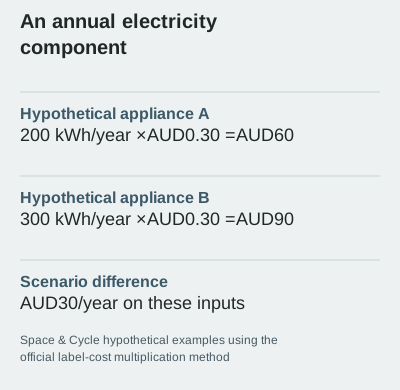
For the same 200 kWh input, a fictionalAUD0.25 rate producesAUD50, whileAUD0.35 producesAUD70. TheAUD20 difference comes entirely from changing the tariff assumption. Neither rate is presented as a current Australian average or an offer available to the reader. Use your own applicable plan information for a personal scenario. If rates vary by time or another condition, one flat number is a simplification that should be labelled rather than treated as a complete model of the bill.
Do not transfer a photographed label to your appliance
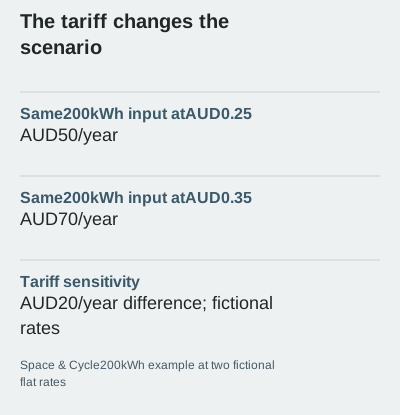
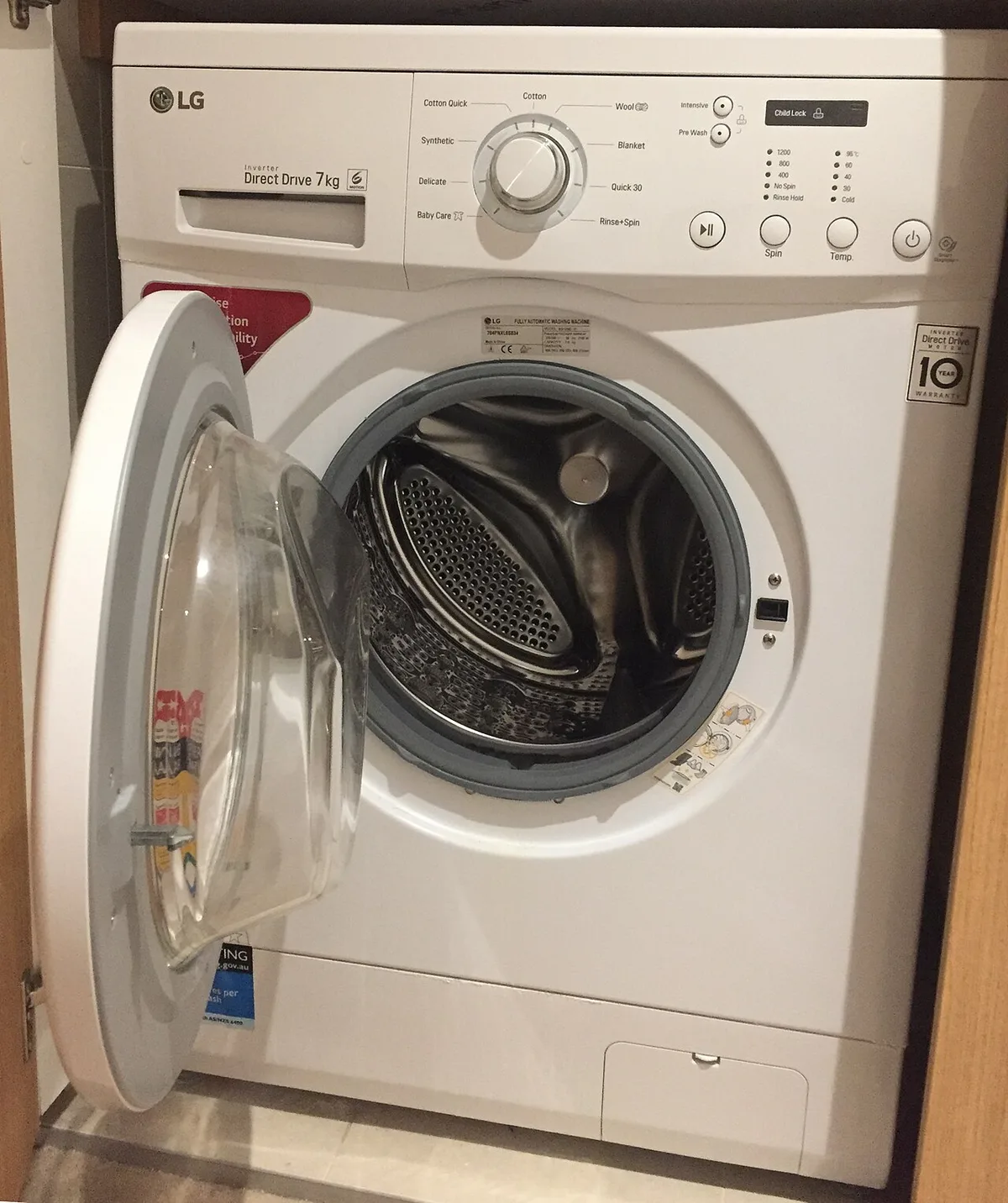
The four-door refrigerator photograph contains a non-Australian label and depicts a different product from our worked documentation examples. It cannot supply an Australian annual-kWh input for another model. The washing-machine image similarly shows controls rather than a verified energy record. Obtain the exact candidate's applicable label or documentation and preserve the source. A visually similar appliance or shared brand name is not sufficient evidence for filling a blank consumption field in a calculator.
Separate the cost component from total ownership
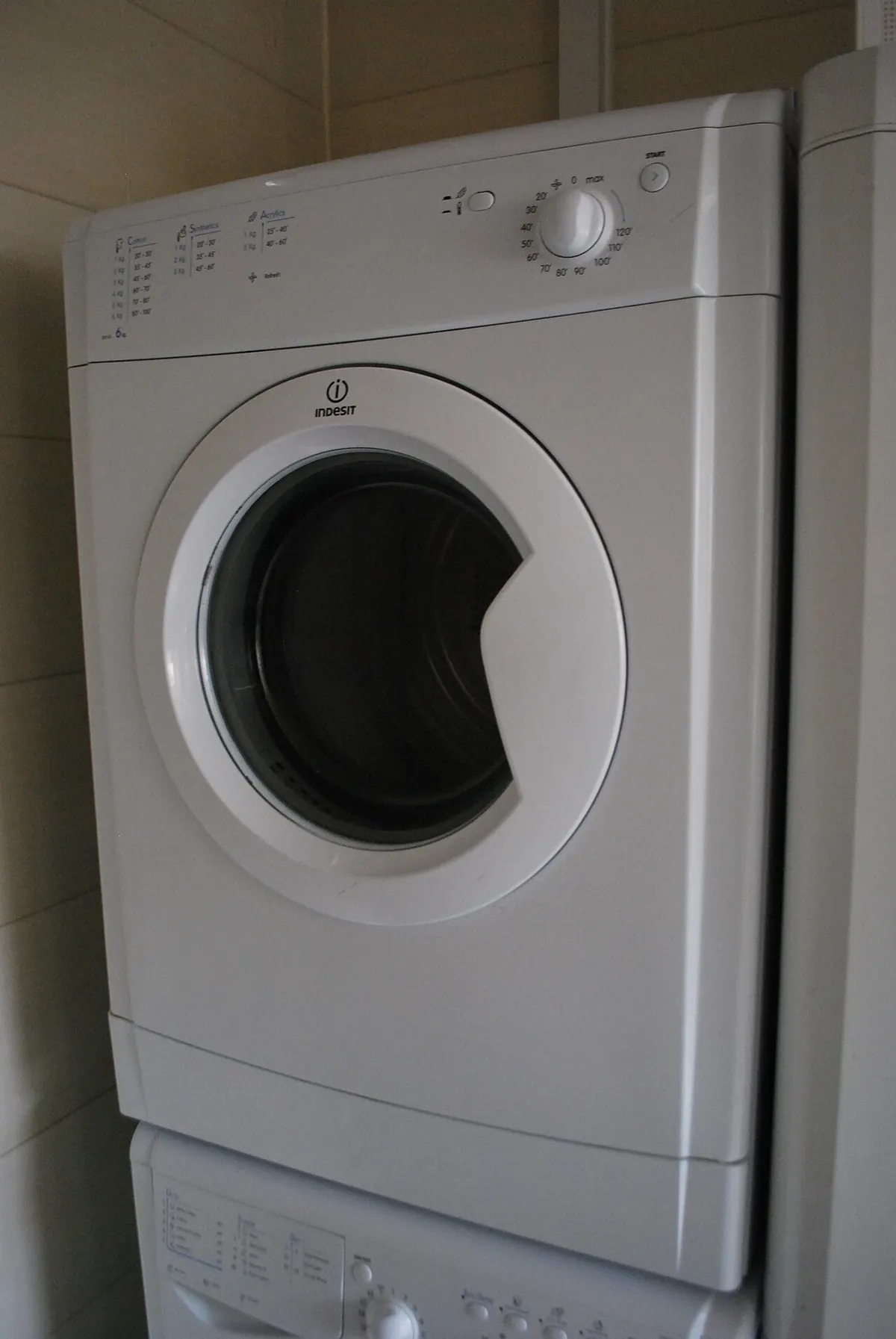
The Indesit dryer image shows a programme selector, reminding us that operation depends on selected conditions. The annual label input retains its own assumptions; the calculation does not automatically adjust them to your household. The result also excludes purchase price, maintenance, detergent and fixed supply charges. If comparing total ownership scenarios, add defensible components separately and state the chosen period. Do not multiply an annual difference by an assumed lifetime and describe the answer as a guaranteed saving without explaining that additional assumption.
Save a scenario that can be updated
Record annual kWh, its basis, the variable rate, source dates and which components are excluded. Recalculate when an input changes. A zero tariff may be mathematically valid as a deliberately stated scenario, but an unknown tariff should remain unknown rather than be entered as zero by default. The tool starts blank for that reason. Its role is to make multiplication transparent; choosing comparable evidence and an appropriate tariff remains the step that gives the resulting AUD figure practical meaning.